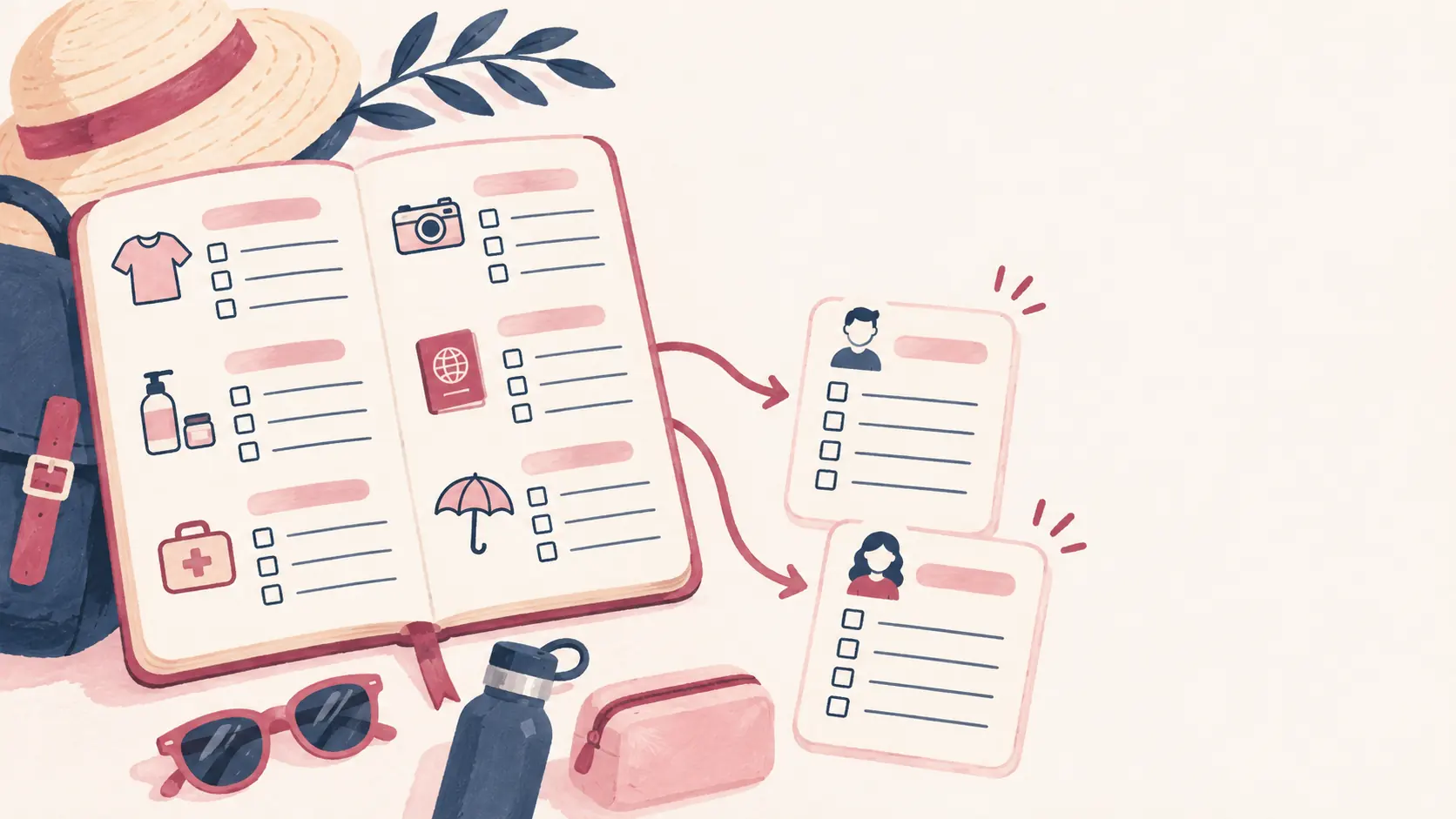
Family Packing List: One Master List, a List for Each Kid
Family packing list: sort shared essentials, personal items, and trip-only gear by traveller, then reuse the master list without rebuilding it each time.
By Ultimate Travel Planner by Cosmo Suite · Editorial policy
Published · 10 min read
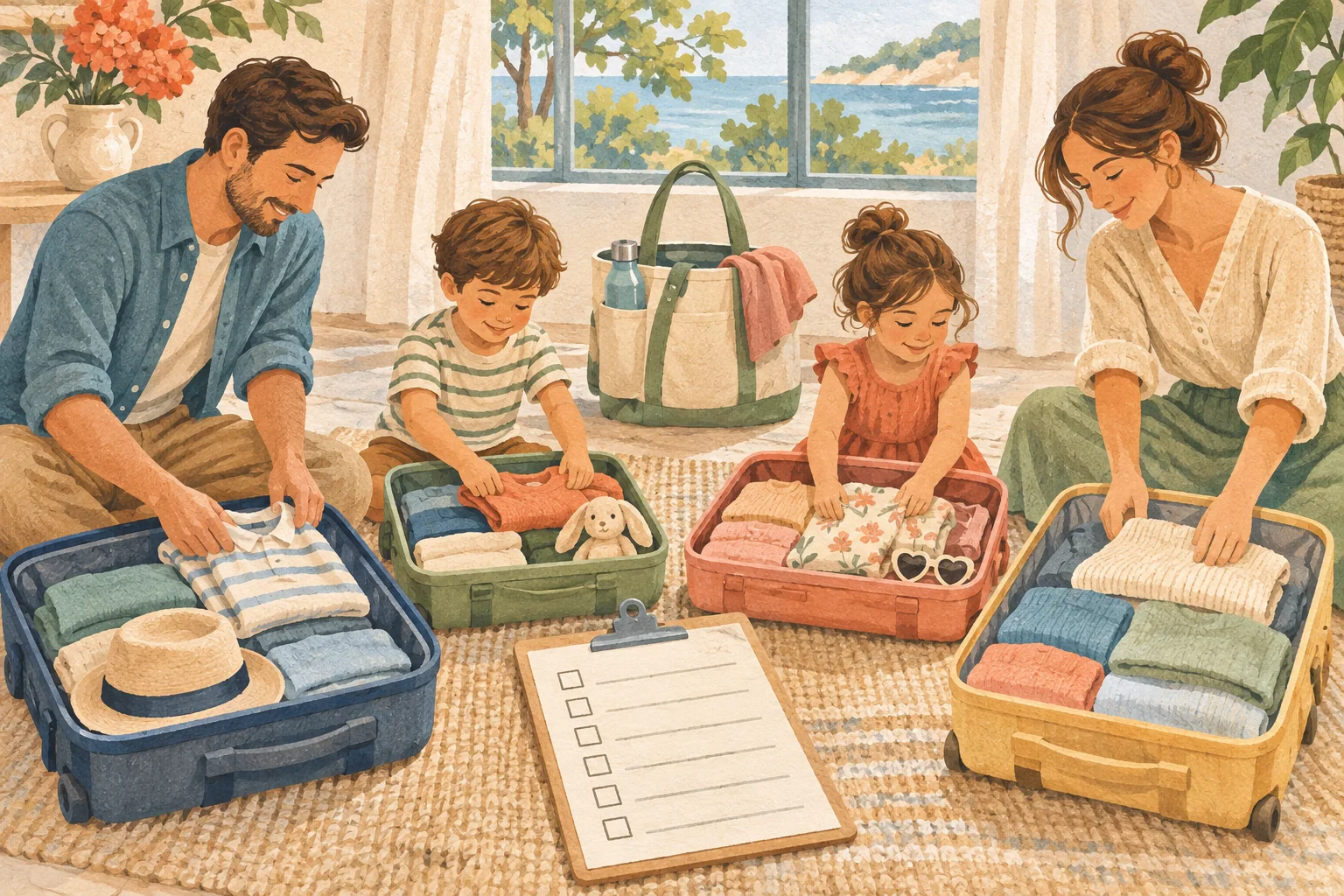
When four people are packing for one trip, even a small question can slow things down: who has the sunscreen? A family packing list helps when it answers two questions for every item: who needs it, and is it in the bag yet?
A trip itinerary spreadsheet with bookings and a reusable packing list together can keep this list beside the rest of your trip details. Use a reusable master list plus a trip list for each traveller. Keep common items in the master list, copy what fits into each person's list, add the things this trip needs, and mark progress as you pack. That keeps one long household checklist from becoming a guessing game.
The Plan in Brief
- Keep reusable household items in a master list.
- Give each traveller a personal list and give shared gear one named owner.
- Add trip-only items after you know the destination and plans.
- Mark an item packed only after it goes into the bag.
A family packing list works better when every item has an owner
A family packing list is a set of items for one trip, grouped by traveller and shared owner. It is easier to use when each item has a clear owner or bag. Start with a master list of items you often bring, then make a trip-specific list for each traveller. Keep the final status simple: needed, packed, or removed for this trip.
The master list is your memory. It can hold the things your household usually considers, such as chargers, basic toiletries, or a child's comfort item. It is not a promise that every item belongs on every trip. A beach visit, a cold-weather weekend, and a city break need different choices.
The trip list is the working copy. It starts with items from the master list that fit this destination and these travellers. Then you add what is specific to the dates, activities, transport, and any individual needs. If a person will use an item, put it on that person's list. If it is shared, assign one person to pack it.
| List type | What belongs there | Example |
|---|---|---|
| Reusable master | Items your household commonly checks before travel | Reusable water bottles, charging cable, toiletry bag |
| Personal list | Items one traveller needs or is responsible for | Child's sleepwear, adult's glasses case |
| Shared gear | One item used by several people, with one owner | Family day bag assigned to one adult |
| Trip-only | Items selected for this destination or activity | Swimsuit for a pool stay, rain layer for a wet forecast |
This division makes duplicate shared items and gaps easier to spot. It does not mean you must bring every item on the list. Remove what does not fit, then keep the items that matter for your real trip.
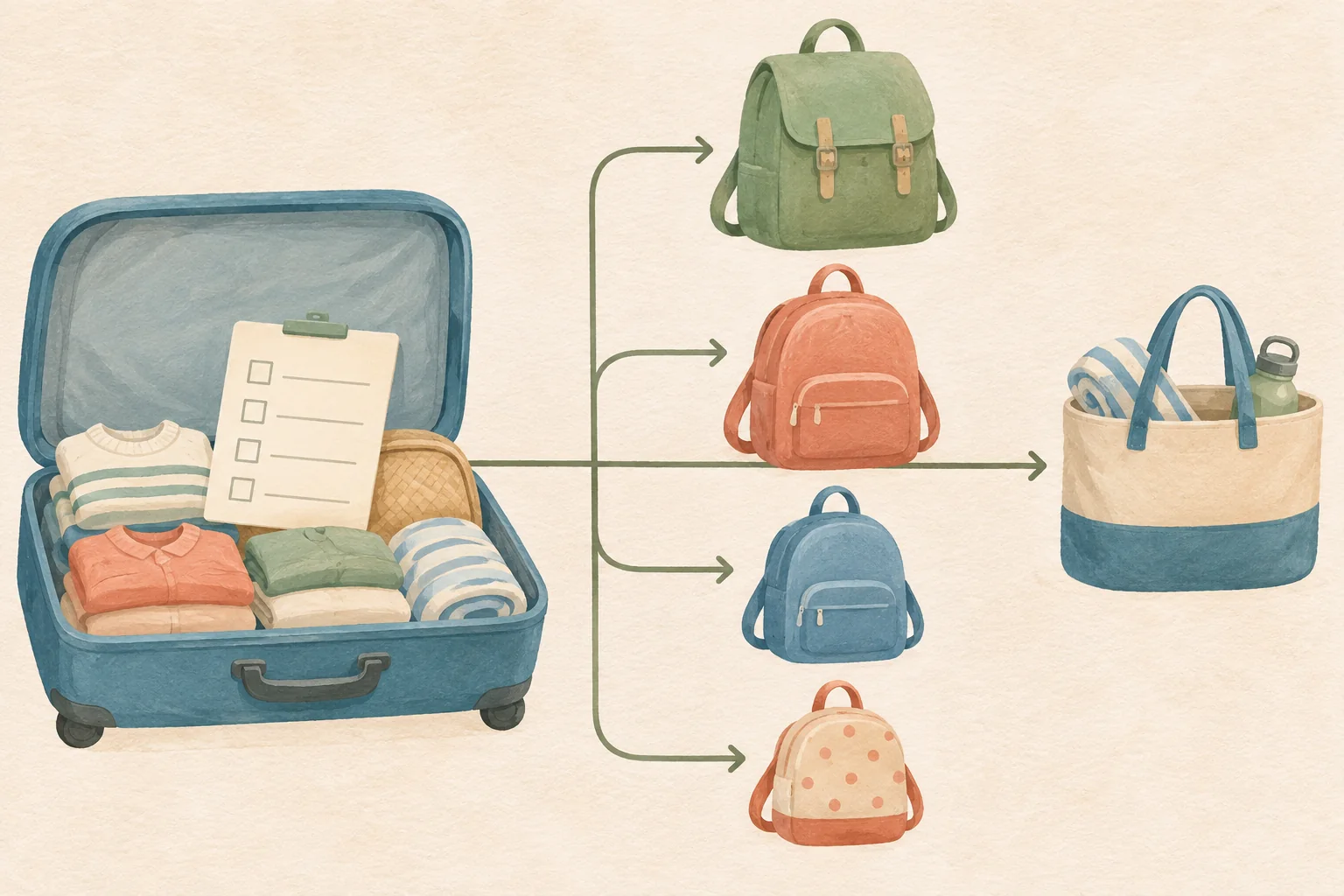
Family packing list: choose a list for each kind of item
Use the master list for repeatable reminders and the trip lists for details that change. Give personal items to one traveller and shared gear to one named owner. This quick comparison keeps the lists clear.
| Item | Best list | Why |
|---|---|---|
| A toiletry bag your household often brings | Master list | It is a reusable prompt, then you decide whether it fits this trip |
| One child's sleepwear or comfort item | That child's list | The responsible adult can check it with that child's bag |
| A shared document wallet | Shared list, with one owner | One person confirms it is packed |
| A pool towel for this stay | Trip-only list | It depends on this destination or accommodation |
Keep the master list short enough to reuse. The trip lists can hold exceptions and one-time details. If you are unsure where an item belongs, ask whether you would want to consider it again on another trip.
Family packing list: what belongs on each person's list
Use the same broad categories for each person, then adjust them to that person's needs. For a simple example, imagine two adults and two children preparing for a week away. The example below is fictional, not a universal checklist or a claim about a real family.
| Traveller or owner | Personal items to consider | Shared or trip-specific check |
|---|---|---|
| Adult 1 | Clothing, toiletries, daily medicines they use, chargers | Owns the document folder in the shared day bag |
| Adult 2 | Clothing, toiletries, glasses or other personal care items | Owns the family day bag and its shared contents |
| Child 1 | Clothing, sleepwear, comfort item, activities for travel | Add any care items this child needs; adult checks the list together |
| Child 2 | Clothing, sleepwear, comfort item, activities for travel | Add any care items this child needs; adult checks the list together |
| Shared gear | Not duplicated across personal lists | One owner packs each shared item and marks it complete |
The categories are prompts, not instructions to pack a particular product. A child who sleeps best with a familiar blanket may need that reminder. Another child may not. Use your own household's routines instead of filling a list with items because a generic guide says so.
Keep sensitive or high-consequence items easy to spot. If a traveller depends on medication, glasses, mobility equipment, or another personal item, record it in a place the responsible adult can review. Ask the relevant clinician or provider when you need advice about handling that item during travel.
One person should own each shared item. If both adults think the other packed the travel documents, the checklist has not assigned responsibility. Write one name beside the item, then let that person confirm it is packed.
How to build a family packing list for this trip
Build the trip lists in a short sequence: copy, assign, adapt, and check. This order keeps reusable items separate from details that only apply to one departure.
Step 1: Copy the master list
Start from the version you want to reuse, not from the last trip's finished checklist. Keep the master list clean of dates, hotel names, and one-time purchases. Copy likely items into the new trip list, then remove anything that does not fit.
Step 2: Create one list per traveller
Add every person who needs their own items checked, including children. Give each person a clear name or label. Put personal clothing and care needs there. Put a shared item in one place and assign one owner, rather than copying it onto every list.
Step 3: Check the trip details
Look at the destination, length of stay, weather information, accommodation, and activities you have actually planned. A pool changes the clothing list. A rental home may change what you bring for meals or laundry. A day outdoors can change what needs to go in the shared day bag. Add only the relevant items.
Step 4: Verify documents and health needs
Do not rely on a generic packing list for entry rules. For international travel with minors, the U.S. Department of State says requirements can vary by destination and that some countries may require consent or evidence of a parent-child relationship. Its Travel with Minors guidance explains what to check, and its international traveller checklist advises travellers to review destination requirements and organize important documents.
Health needs also depend on the person and destination. The CDC recommends checking travel health guidance for children before a trip and considering a travel health kit suited to the journey. Use the CDC's traveling with children page and Pack Smart list as starting points. Ask a qualified health professional about personal medical questions. Do not treat this article's examples as medical advice.
Step 5: Mark progress as items go into bags
Use one status for each item: not packed, packed, or not needed. Mark it packed only when it is physically in the right bag. If you mark items while shopping or while they are still on a counter, the list no longer tells you what is ready.
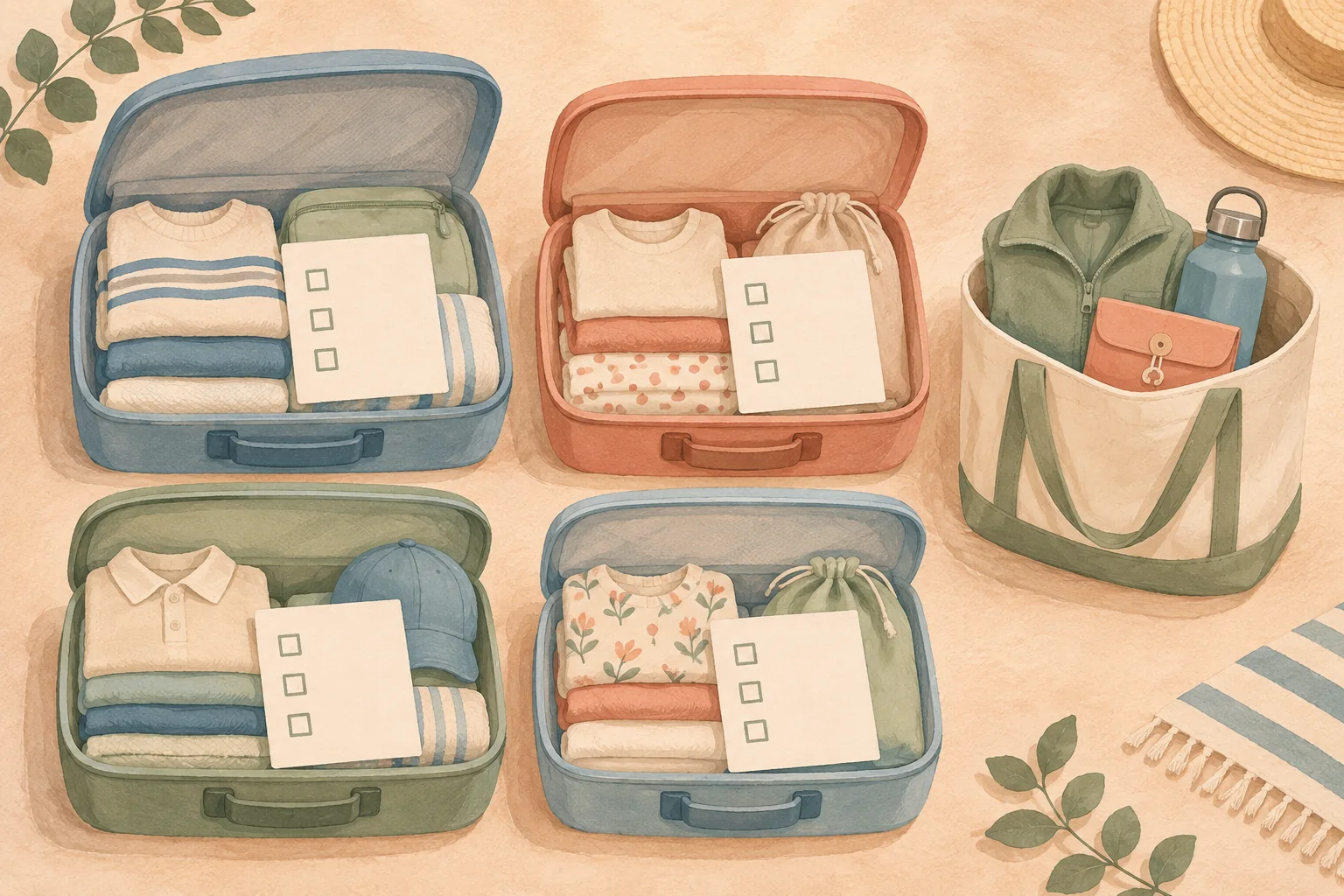
Step 6: Do a final pass by person and by shared bag
Read each person's list once. Then check the shared bag by owner. This is where you catch an item that exists on the list but has not gone into a bag. If something is missing, leave its status open and decide who will handle it.
Add trip-specific items without bloating the master list
Keep the master list useful by adding an item only when you want to consider it on future trips. A destination-specific item belongs on this trip's list unless you would expect to use it again. That keeps next year's copy from carrying last year's hotel details and activity gear.
Use a few practical prompts when adapting the lists:
- Destination: What will the expected conditions change about clothing or footwear? Check a current forecast near departure rather than treating a forecast from planning day as fixed.
- Activities: Which confirmed plans need special clothing or equipment? Add only what those plans call for.
- Length of stay: Will you have access to laundry or need enough changes for the full stay? Decide based on your accommodation and routine.
- Travel day: What will each child want close at hand during the journey? Put those items in the bag you can reach, not at the bottom of checked luggage.
- Personal needs: What does each traveller use every day? Ask the person or caregiver who knows their routine, then assign the reminder to an adult.
If plans change, edit the trip list and the bag assignment. Do not copy every change into the master list unless it should be a prompt for a future trip too. A master list is meant to save you from starting over, not to preserve every decision you made once.
For a travel planner spreadsheet with packing and itinerary tabs, start with reusable prompts and remove what does not apply. If your route has several stops, a road trip itinerary template can help you keep each day's fixed plans and overnight stop visible while you decide what belongs in the car.
Keep documents and travel-day items easy to check
Put the documents you need to verify near the top of the planning process, even if you pack them later. Rules can differ by route, nationality, custody situation, and destination. Confirm requirements with the government source for your destination and your carrier, then add the documents that apply to your trip.
For a U.S. citizen child traveling internationally, the State Department advises carrying evidence of the relationship to the child. It also notes that some countries may ask for consent from a parent who is not traveling. Check the destination's entry and exit requirements before you leave, especially if a child is traveling with only one parent or another adult.
Keep a copy of important details in a separate place from originals when appropriate. The State Department checklist recommends copies of travel documents and leaving a set with a trusted person. Follow its current instructions for your situation, and protect personal information when you store or share copies.
For the travel day itself, make a short accessible list of items that should not be buried in a suitcase. That might include the documents you have verified, the medicine a traveller needs during the journey, or a child's activity for a long wait. Follow current airline, airport, and destination rules for restricted items.
The first-time flying tips guide can help you put flight-day tasks in order. Keep the packing list focused on bags, then use the itinerary for times, addresses, and confirmed bookings.
Why trust this article
The Cosmo Suite team built the Ultimate Travel Planner spreadsheet and checked its packing-list details against the product contents. The About page explains who publishes this site. The editorial policy explains how its content is reviewed. The travel-document and health guidance above comes from the U.S. Department of State and CDC pages linked in the relevant sections. Those sources were checked on November 7, 2026. Requirements vary by destination and traveller, so verify them before departure.
Where Ultimate Travel Planner fits
Ultimate Travel Planner (ultimatetravelplanner.site) includes a Master Packing List and a Packing by Traveller tab. The master list starts each traveller's list, where you can track packed progress. The planner supports trips up to 60 days and up to 8 travellers. It comes in Google Sheets and Excel as a sample copy and a clean copy.
The benefit is the separation: common reminders can travel from one trip copy to the next, while each traveller gets a list for this trip. You still choose what applies, assign shared items, and check the bags yourself. The planner does not decide what your children need or verify travel rules.
If you want a trip itinerary spreadsheet with a reusable master packing list, the file keeps that list with the rest of the trip plan. The included packing checklist is also available as a printable page. For a broader view, see the sample day layout in the travel itinerary template post before you start your own trip copy.
This file is for organizing your own plan. It does not replace destination guidance, an airline's current instructions, or advice from a health professional.
Frequently asked questions
How do I make a family packing list?
Start with a reusable master list of items your household often packs. Copy the relevant items into a separate list for each traveller, add trip-specific items, and give shared gear one clear owner. Mark each item as packed only when it is in the bag.
What should I pack for kids on a family trip?
Use your child's usual needs and the trip details as the guide. Consider clothing, comfort items, entertainment, and any health or care items your family uses. Check destination guidance and your transport provider's current rules for items that have special requirements.
Should each family member have their own packing list?
Usually, yes. One list per traveller makes personal items easier to check. Keep shared gear on one list with a named owner so two people do not pack the same item while another item is missed.
When should I start a family packing list?
Start the master list whenever you have time, then copy it for a trip after the dates and activities are clearer. Add destination-specific items as you confirm plans, and do the final check against your own bags and travel documents before leaving.
How can I reuse a family packing list for the next trip?
Keep the reusable master list separate from trip-only items. For a new trip, copy the master list, remove items that do not fit, and add what the destination, duration, and planned activities require.