First Time Flying Tips: From Booking to Boarding
First time flying tips for a U.S. departure: check your airline's details, follow airport signs, prepare for screening, and find your gate in order.
By Ultimate Travel Planner by Cosmo Suite · Editorial policy
Published · 9 min read
General information, not travel, legal or medical advice. This guide uses a U.S. departure as its example. Airport and airline steps differ, so check the instructions for your own flight.
A first-time flyer is a traveler taking their first flight. The airport can feel like a chain of small decisions: which counter, which line, what to show, and where to wait. Know the order before you arrive: check the airline's instructions, check in, clear security, confirm the gate, then board when your group is called.
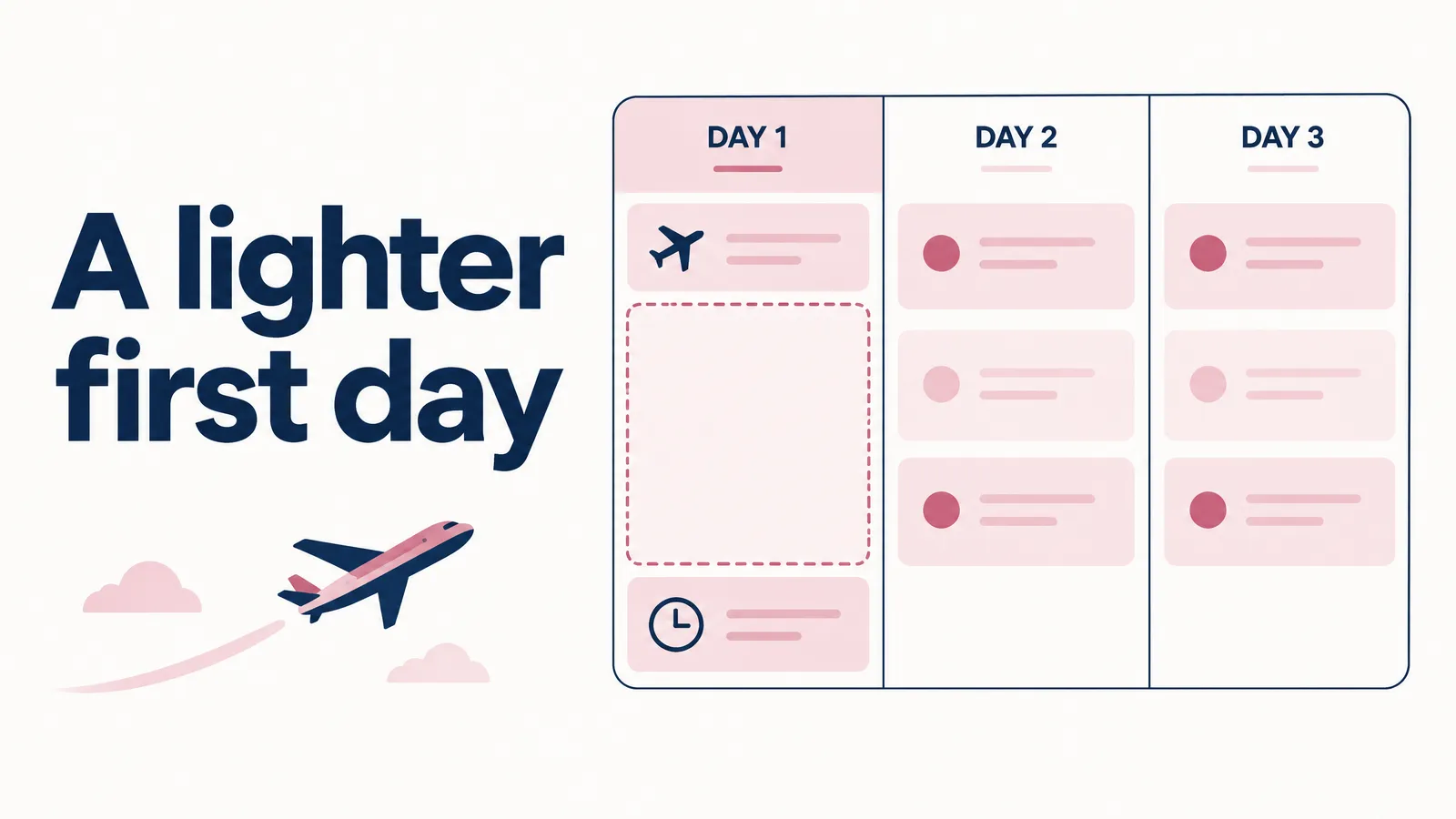
A trip itinerary spreadsheet with bookings beside each day can hold your flight number, airport, and confirmation details in one place. Use your airline's current channel for live flight changes.
The Plan in Brief
- Confirm the rules and deadlines with your airline and departure airport.
- At the terminal, check the screens and complete check-in or bag drop if needed.
- Follow the instructions at security, then check your gate again.
- Board when the airline calls your group and follow the crew's directions.
Before you leave home
Before leaving, check the current flight details and deadlines with the airline that operates your flight. The FAA directs travelers to check flight status with their airline and to review airport status and weather before heading to the airport. Its Preparing to Fly page links to those resources.
Start with your confirmation email or the airline's app. Confirm the passenger name, travel date, departure airport, destination, and flight number. For a connection, note each flight number and the airport where you change planes. The gate may change during the trip.
Next, look up the airline's rules for your ticket. Check the permitted carry-on size, number of bags, check-in deadline, and the latest arrival recommendation for your airport and route. The FAA says airline carry-on guidelines can differ and advises checking directly with the airline. Its carry-on baggage tips also explain that some items belong in the cabin, so check the current rules for anything you are unsure about.
Check the documents needed for your route with the relevant government agencies. Requirements depend on your destination and who is traveling, so verify passport, visa, and identification rules for your trip. Keep the accepted documents easy to reach, then secure them when you do not need them.
If the airline offers online check-in, follow its timing and steps. Save the boarding pass in the format it accepts. A screenshot or offline copy can be a backup if the airline supports it, but keep checking the airline's live flight page for updates. If you are checking a bag, confirm where and when to drop it. Some airlines have earlier bag cutoffs than departure time.
Keep three details handy: the airline, flight number, and destination. Share the flight number and arrival airport with anyone taking you or meeting you.
At the airport, start with the airline
At the terminal, use the airline's instructions to decide whether you need a check-in desk or bag-drop counter before security. Check the departure screens when you enter. They can show the current counter, terminal, and flight status. If the screen and your airline's app disagree, ask airline staff which information to follow.
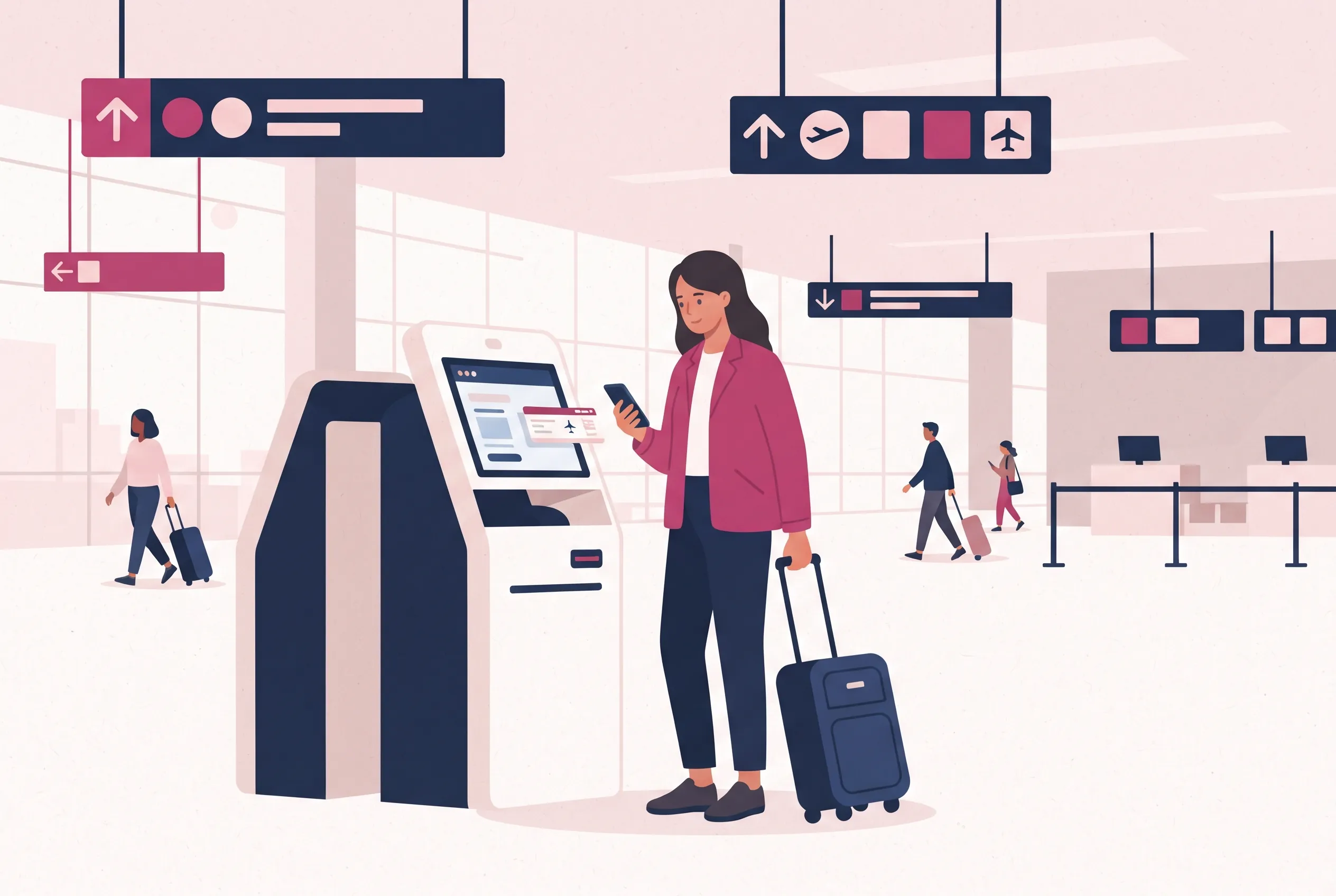
If you have a checked bag, follow signs for your airline and ask staff if the bag-drop area is not clear. Keep the bag receipt until you collect the bag. If you have no checked bag and your airline says you are checked in, follow airport signs toward security. Airports can arrange these areas differently, so the airport's signs and staff matter more than a diagram from another airport.
Keep your boarding pass and required identification where you can reach them without unpacking. At a U.S. checkpoint, the TSA planning guide describes identification and boarding-pass validation before screening. Have them ready when you approach the checkpoint, then follow the directions given there.
Airports may have more than one checkpoint or route to a gate area. Follow signs for your departure gates. If the route is unclear, ask airport or airline staff before joining a line.
First-flight timeline: what happens next
A first flight usually follows the same broad order, but your airline and airport control the exact steps. Use this timeline to know what to do and which detail to verify.
| Stage | What you do | What to verify |
|---|---|---|
| Check-in | Confirm the passenger and flight details; get the boarding pass | Check-in deadline and accepted documents with the airline |
| Bag drop | Hand over checked baggage if your ticket includes it | Counter location, bag cutoff, and baggage allowance |
| Security | Present the requested documents and follow lane instructions | Current screening rules with the departure airport or security authority |
| Gate | Walk to the gate shown for your flight and keep checking updates | Flight number, destination, gate, and boarding time |
| Boarding | Join when your group or row is called | The airline's current boarding instructions |
The airport screen shows the flight's current assignment. Your airline sets the check-in, arrival, and boarding instructions. For example, Delta's domestic check-in guidance notes that its recommendations can vary by airport and schedule. Your airline's instructions take priority for your booking.
You can use a day-by-day travel itinerary template to keep the flight and ground plans together. Add the flight number, departure and arrival airports, and any fixed connection or transfer. Do not treat a saved gate or time as current until you check it again on travel day.
Move through security one instruction at a time
At security, follow the instructions posted at your departure airport and given by the officers in your lane. The TSA's checkpoint planning guide describes the checkpoint process and identity checks, while individual lanes can use different equipment and procedures.
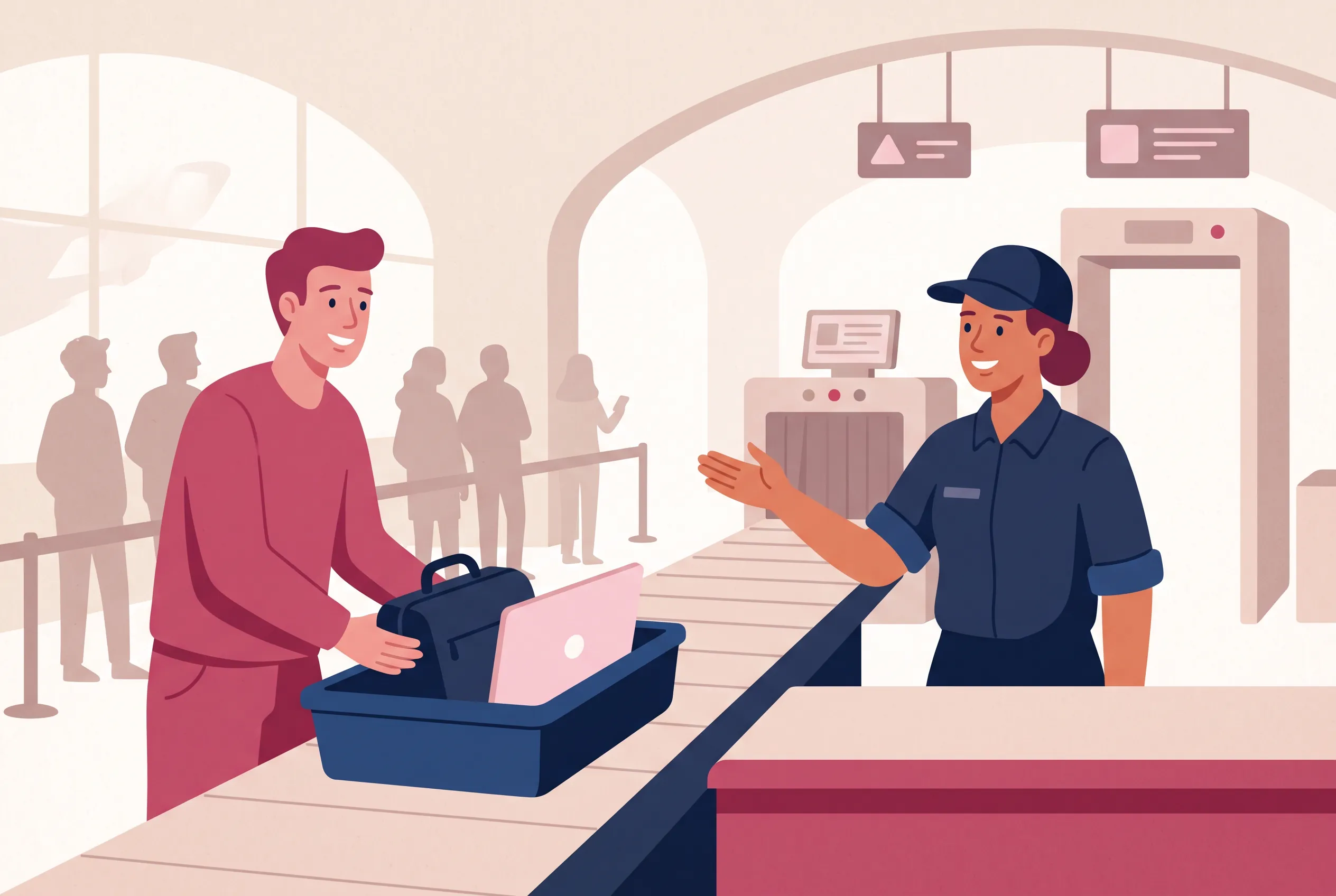
Before you pack, check the official list of items permitted by your departure airport's security authority and the airline's baggage limits. The FAA cautions that airlines can set stricter carry-on limits than general dimensions. A bag that fits one carrier's rules may not fit another's.
At the checkpoint, wait until you are asked to show your documents or place items for screening. Some lanes may ask you to separate belongings or use a different process. Do not assume that a friend's last trip used the same steps. Follow the current signs and instructions. If you have a medical device, mobility aid, or an item you are unsure about, tell the officer before screening begins and ask what to do.
After screening, pause to collect your belongings and move away from the belt before repacking. Check the tray and the floor around you. Keep your identification and boarding pass together, then follow airport signs to your gate area.
The TSA process is one part of the trip, not a test you are expected to know in advance. Officers can direct you through it. If you miss an instruction, ask them to repeat it rather than copying what someone else is doing.
Find your gate and make a small waiting plan
Once you are through security, find your flight number on the departure screens and match it with your boarding pass. Then follow the gate signs and check the screen again when you arrive. Gates can change, so a printed pass or saved screenshot should not be your only source of current information.
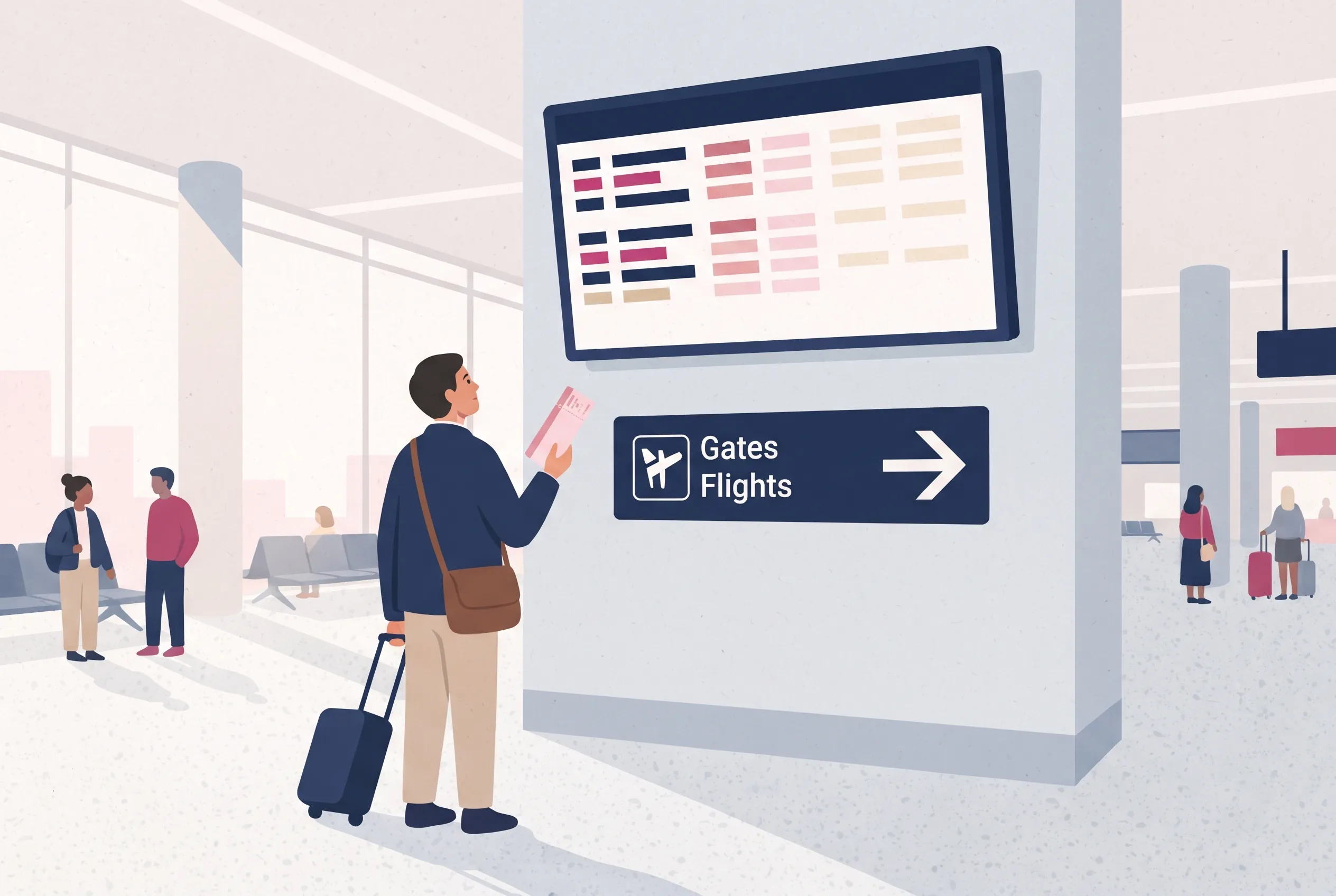
At the gate, match the destination and flight number on the display. If they do not match your airline app, ask the gate agent before boarding begins.
Choose a seat near the gate if possible, and keep your boarding pass and identification accessible. If you leave for food or the restroom, note the gate number and set a reminder to return in time. Follow the boarding time shown by the airline, which may be earlier than the departure time printed in your itinerary.
An airport map can help if the gate is far away. Use the airport's own map or ask staff for directions. Walking times shown by an app are estimates; a long terminal, a shuttle, or a mobility need can change how long the route takes. If the gate moves, check whether the new gate is in another concourse before you leave.
Boarding and the first minutes on board
Board when the airline announces your group or row, using the instructions on your boarding pass and at the gate. Keep the boarding pass ready to scan or show. If you do not understand which group is being called, ask the gate agent before joining the line.
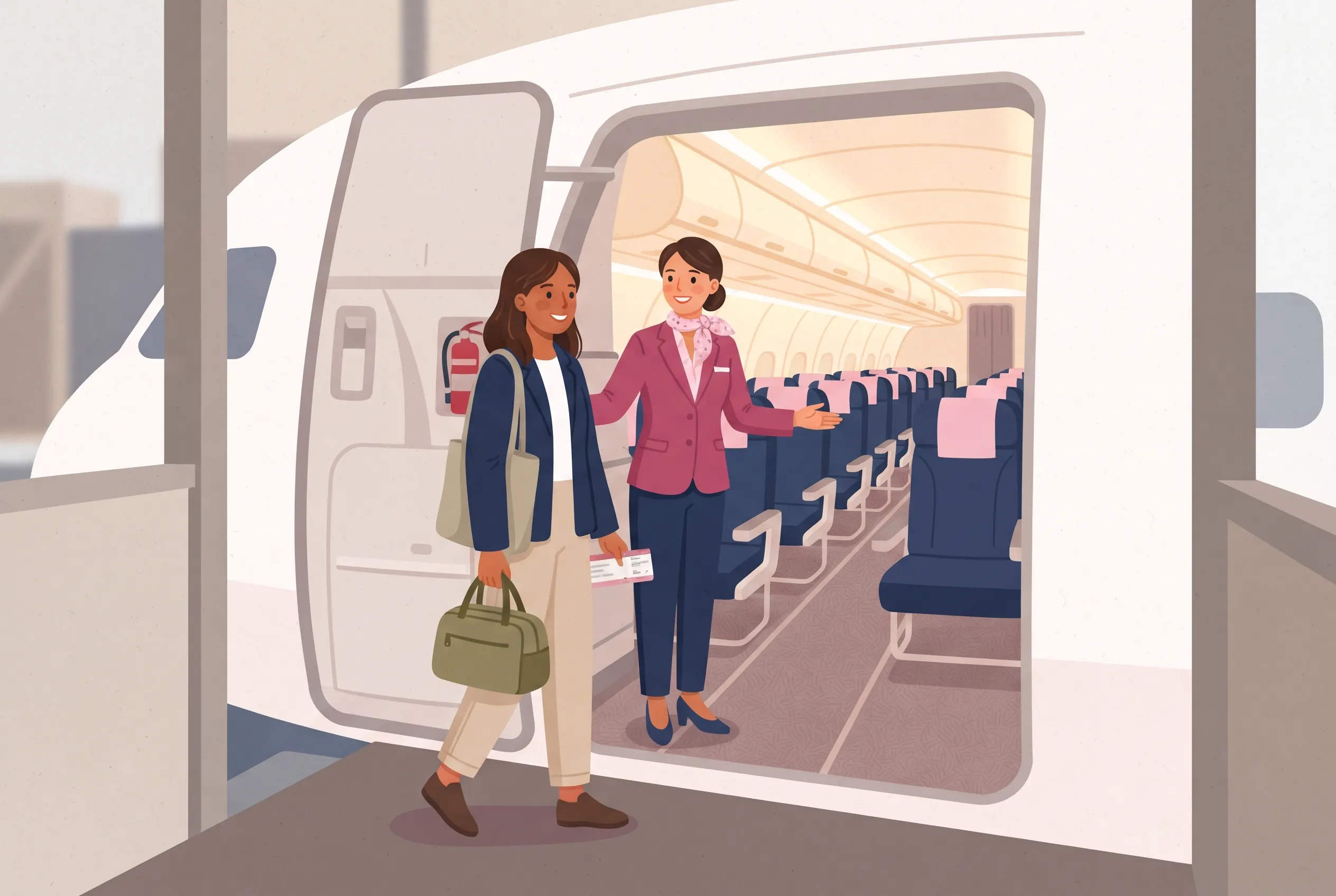
Once on board, match the seat number on your pass to the row. Store your carry-on where the crew directs you and keep the aisle clear. If you cannot find your seat or the bag will not fit, ask a crew member for help instead of trying to move other passengers' belongings.
Listen to the safety briefing and follow crew instructions. Keep your seat belt fastened when directed. If you need help during the flight, use the call button or speak to a crew member when it is safe to do so. The airline's crew is the right source for questions about the aircraft and onboard procedures.
For a connection, listen for announcements after landing and check the airline's current information for the next flight. Follow signs for connecting flights if you remain in the airport. If you need to exit, collect checked baggage, or clear border control, use the directions for your route and ask airline staff if the connection plan is unclear.
Keep your flight day connected to the rest of the trip
A flight has details that belong in the travel plan, even when the airline app is the source for live updates. Put the departure and arrival airports on the correct dates. Add any confirmed connection, pickup, or hotel check-in that depends on the flight. Keep optional plans separate from commitments that have a time or reservation.
That distinction gives you a way to adjust the day if the airline changes a time or gate. A trip itinerary with bookings beside each day can keep the planned sequence visible, while you confirm live details with the airline.
Before you leave, read the departure day from morning through the arrival. Can you find the flight number, check-in or bag-drop plan, airport, and next fixed booking? If one detail is missing, add it or mark it as something to confirm. This takes less effort than trying to remember which email held a transfer address after you land.
Why Trust This Article
The Cosmo Suite team built the Ultimate Travel Planner and prepared this guide using official aviation and security sources. We checked the FAA pages on preparing to fly and carry-on baggage, the TSA checkpoint planning guide, and Delta's domestic check-in page on 31 October 2026. Delta is included only as an example of airline-specific timing. This guide describes general steps for a U.S. departure; confirm current requirements with your own airline and airport.
What the Ultimate Travel Planner can organize
The Ultimate Travel Planner (ultimatetravelplanner.site) is a spreadsheet for organizing a trip's itinerary and bookings. It includes 12 tabs in Google Sheets and Excel, a filled-in sample and a clean copy, and two printable pages. The file is designed for trips up to 60 days and up to eight travelers. You enter the exchange rate yourself.
The planner can hold a flight as a booking and place it beside the day it affects. It does not import booking emails. Use your airline's current channel for check-in, boarding passes, gate changes, and operational instructions.
If you already keep a travel plan in a document or sheet, you can use the same sequence here: flight, check-in, security, gate, boarding. The Ultimate Travel Planner itinerary and booking spreadsheet includes a sample trip and a clean copy if you want those details in a connected layout. The checklist above also works without it.
Frequently asked questions
How early should a first-time flyer arrive at the airport?
Use the arrival recommendation and check-in deadlines from your airline and departure airport. They vary by route, airport, and whether you are checking a bag.
What documents do I need for my first flight?
Check the airline and official government requirements for your route. For a U.S. airport security checkpoint, have the accepted identification and boarding pass ready as the airport directs.
What should I do first when I get to the airport?
Check the flight screens and your airline's instructions. Go to check-in or bag drop if needed, then follow signs to the security checkpoint.
What happens at airport security?
You and your belongings go through screening. Follow the instructions at your airport and ask an officer if you are unsure what to do with an item.
How do I find my gate?
Match your flight number and destination on the airport screens with your boarding pass, then confirm the gate in your airline's current flight information.