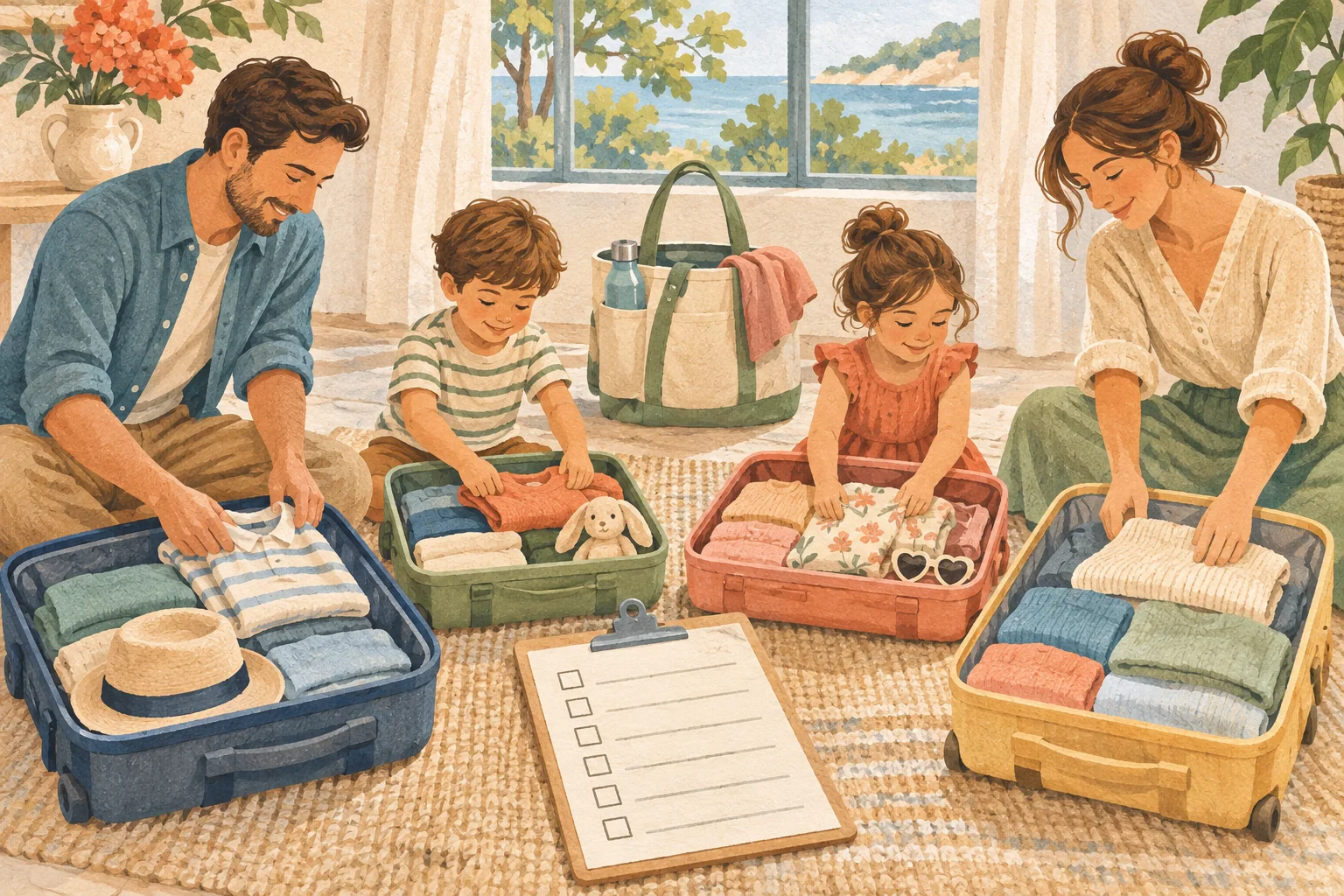
Packing List Template You Keep: One Master List, a List for Each Traveller
Packing list template method: keep one master list, copy it for each traveller, then add items that belong only to this trip before you pack.
By Ultimate Travel Planner by Cosmo Suite · Editorial policy
Published · 8 min read
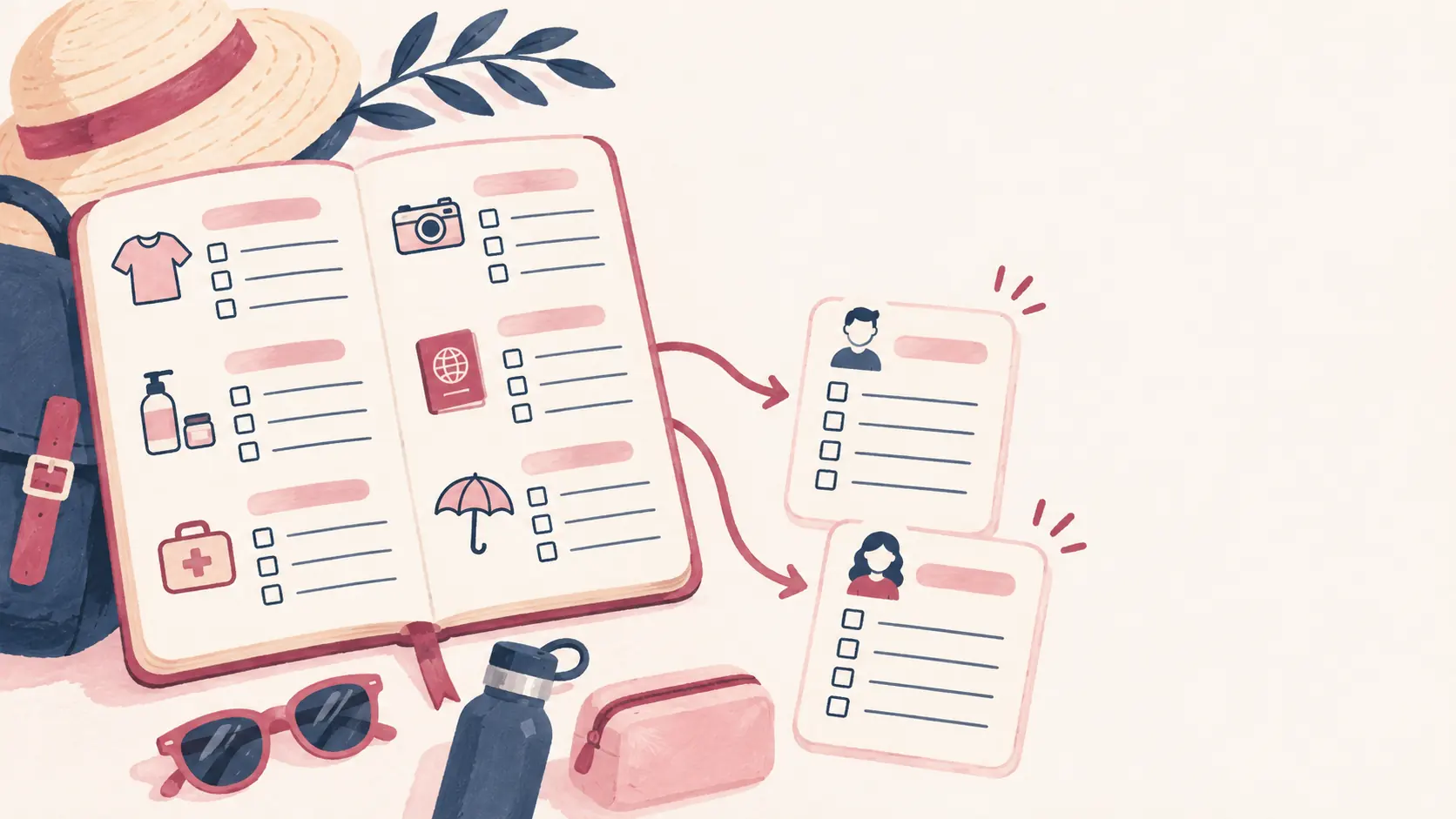
You finish unpacking and find the same things you forgot last time: the charging cable, the tote bag, the small item that was obvious only after you needed it. Then the next trip comes around and you start another list from scratch.
Use a packing list template to keep one master list for items that come up on many trips. For each new trip, copy it for each traveller and remove what does not apply. The Ultimate Travel Planner at ultimatetravelplanner.site uses this master-list-to-traveller approach in its spreadsheet.
The Plan in Brief
- Keep a master list for items that recur across your trips.
- Copy it for each traveller, then remove what does not fit this trip.
- Add trip-specific items separately so the master stays useful.
- Update the master list after you return, while the gaps are still easy to remember.
What a reusable packing list template should hold
A packing list template works best when it separates repeat reminders from choices for one trip. Start with a master list, then make a trip copy to trim and mark as you pack.
A master packing list is the repeatable set of items you review for each trip before trimming it to fit one plan. A trip list is the copy you use for the current destination and dates.
Give each item a category and a clear place to record whether it applies to this trip. If more than one person is packing, add a traveller field or make an individual copy for each person. A short note can explain an item that is easy to confuse, such as which bag holds it or whether it is shared.
Keep the list practical. It should help you answer: do I need this, who is taking it, and has it gone into the bag? A list that only names items can still leave those decisions fuzzy. A list with too many columns can be just as hard to use when you are standing beside an open suitcase.
Use one row for each item. Add a note only when it helps you act, such as its storage spot or who uses it. A status field can show whether the item is needed, assigned, or packed. Leave a few blank rows for new reminders, so each one has a place of its own the next time you copy the list.
For the wider trip plan, the travel itinerary template with a filled sample trip shows how day plans and bookings can sit together. Keep the packing list focused on what goes with you; use the itinerary for where you need to be.
From master list to traveller list: a sample workflow
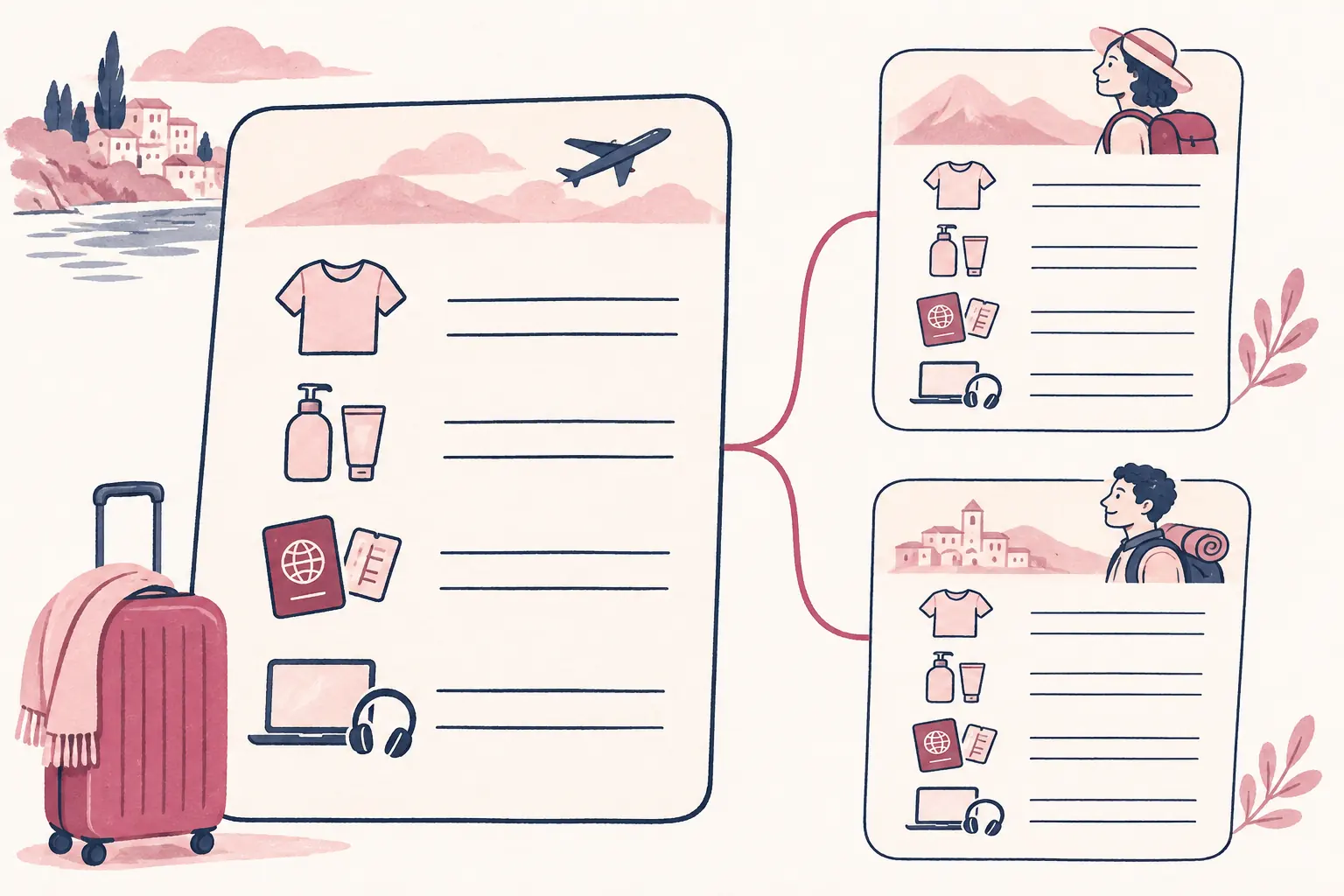
Start with one master list that reflects what you routinely need. Before a trip, duplicate it and rename the copy for the trip. Then review the items one by one and mark each as included, not needed, or specific to this trip.
For a shared trip, make a list for each traveller. Keep common items visible too. A shared charger or document pouch can have one named owner, while personal clothes and toiletries stay on the person's own list. This avoids the quiet double-checking where everyone assumes somebody else packed the shared item.
The Ultimate Travel Planner's sample copy includes a Master Packing List and a Packing by Traveller tab. The master list carries over between trips, and the traveller lists let you work through the current trip.
Packing list template: which list belongs where?
Use a master list for the reminders that recur, a trip list for the choices that change, and a traveller list for who is responsible. These lists work together when each item has one clear home.
| List | What belongs there | What to do before a trip | Best for |
|---|---|---|---|
| Master list | Items you often need across trips | Keep, revise, and copy | Reusable reminders |
| Trip list | Items that depend on this destination or plan | Add or remove after checking the trip | One specific itinerary |
| Traveller list | Items one person is responsible for | Assign shared items and mark personal items | Trips with more than one traveller |
| Printable checklist | The items you want to tick while packing | Print the current list and leave room to mark it | Packing away from your screen |
The master list gives you a starting point. Use the trip copy to decide what belongs in the bag this time.
Build your master list around categories
Group items by the way you remember and pack them. Clothing, toiletries, documents, electronics, and small everyday essentials are useful starting categories. Rename them if another grouping matches your routine better.
Put one item on each row. If you need to remember a quantity, add a quantity field, but avoid setting a default number that pretends to suit every trip. A weekend away, a work trip, and a longer holiday can call for different amounts. Your trip list should make that choice visible.
Add a short field for where an item goes when that helps you pack. “Carry-on,” “main bag,” or “wearing” can be more useful than another note about the item itself. You can also add a small trip-only area for things like a booked activity or equipment you need for a specific plan.
The U.S. Department of State's International Travel Checklist covers travel documents and destination information for U.S. travelers. The TSA Travel Checklist is another official reminder list. Use sources like these to check their current guidance; a personal packing template cannot tell you the entry rules or baggage requirements for every destination and carrier.
Make a copy for each traveller
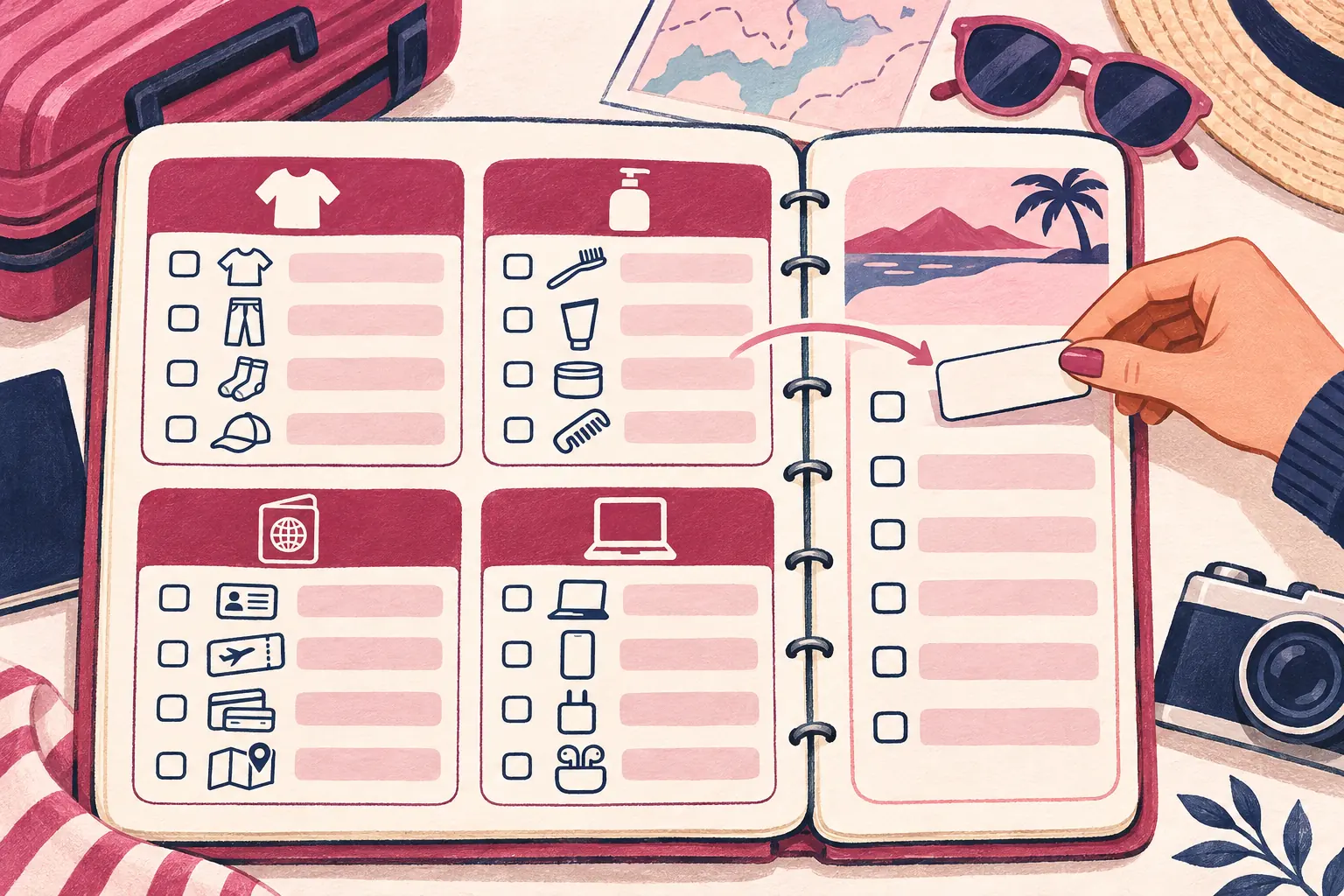
Give each traveller a list they can complete themselves. It can be a separate copy or a traveller column on a shared sheet. Choose the version that makes responsibility clear without making the group maintain duplicate information.
For shared items, name one person beside the row. Keep personal items on each traveller's list. If a child or another traveller needs help packing, the adult helping can use that person's list as the check-off sheet. Naming an owner makes it clear who is bringing each shared item.
As you prepare the copy, decide which rows are always relevant, which depend on the trip, and which belong to one person. An item used on most trips can stay on the master. A special adapter or activity item can stay on the trip list. An item that only one traveller uses belongs on that person's copy. These choices make it easier to trim the list without losing a reminder you meant to keep.
The Ultimate Travel Planner supports up to eight travellers, with a packing list for each. If you are organizing a family trip, this family packing list guide covers the method for children. The same assignment approach works for partners or friends, with one list per person and one owner for shared items.
Keep the printable checklist short enough to use
A printed list works best when it has room for a mark beside each item and does not force you to scan an entire workbook. Print the current trip copy, not the master list with every possible reminder. If the list runs across the page, use print preview to remove extra columns or switch the orientation before printing.
A paper checklist can stay beside the open bag while you pack. If you prefer a screen, keep the same item names and categories there. Tick an item once it is in the bag.
The Ultimate Travel Planner includes two printable pages: a one-day plan and a packing checklist, each in US Letter and A4. The art here is illustrative. Check the actual page layout before printing your own list.
Update the master list after the trip
After you return, note what you looked for, packed but did not use, or needed only for that kind of trip. The details are easier to recall while the trip is still fresh.
Add a missing item to the master only if it is likely to recur. Keep a one-off item on the trip copy or in a small trip-specific section. Remove a reminder that no longer helps. That keeps the master list from growing into an archive of every possible thing you might someday need.
Before you change the master, compare it with the trip copy and the bags you actually packed. A row can look useful on screen and still be hard to act on if it has no owner or no place in the bag. Add the missing detail that would have helped you pack. If the reminder applied to only one destination or activity, leave it on that trip's version.
Keep the master separate from the current packing checklist. If you edit the only copy while packing, useful reminders can disappear into one trip's details. The master stays steady; the trip copy can change.
What makes a packing list template reusable
The master list improves after each trip. Carry forward reminders that apply broadly, and leave one-off decisions on that trip's copy.
Try this simple review after each trip:
- Add an item you needed and did not have.
- Remove an item you repeatedly carried without using.
- Keep destination or activity-specific items off the master list.
- Check whether each shared item has one person responsible for it.
Over time, the list reflects your own routine. A reusable master packing list in a spreadsheet carries those reminders to the next trip, and you choose what makes the cut.
Why trust this article
Ultimate Travel Planner by Cosmo Suite built the spreadsheet described here. The product details come from its published contents, including the Master Packing List, Packing by Traveller, and printable checklist. The external references are the U.S. Department of State's international travel checklist and the TSA's travel checklist, opened on November 11, 2026. The about page identifies the publisher, and the editorial policy explains how this site handles sources. Their guidance can change, so use the current official pages for destination and carrier requirements.
Use a ready-made packing list template
If you would rather start with a workbook, the Ultimate Travel Planner packing list includes a Master Packing List and Packing by Traveller tab, plus a printable packing checklist. Its 12 connected tabs are available in Google Sheets and Excel, with a sample copy and a clean copy. The master list carries to the next trip, and the traveller lists help you make a trip-specific version. You can begin with the sample or enter your own trip in the clean copy.
Frequently asked questions
How do I make a reusable packing list?
Start with a master list of items you often use, then copy it for each trip and remove anything that does not fit that trip. Add new items after you return.
What should be on a travel packing list?
Use categories that match your trip, such as clothing, toiletries, documents, and electronics. Check destination requirements with official sources before you travel.
Should each traveller have a separate packing list?
A separate copy can make it clear who is packing each item. Keep shared items visible so two people do not assume the other has them.
Can I print a packing list template?
Yes. Print the checklist you need, leave space to mark items as packed, and check the page in print preview first.
Does the Ultimate Travel Planner include a packing list?
Yes. It has a Master Packing List and Packing by Traveller tabs, plus a printable packing checklist page.