How to Build a Master Packing List You Reuse Every Trip
Master packing list: build a reusable core, copy it for each trip, and keep only the clothes, gear, and extras that fit your plans and travel routine.
By Ultimate Travel Planner by Cosmo Suite · Editorial policy
Published · 8 min read
How to Build a Master Packing List You Reuse Every Trip
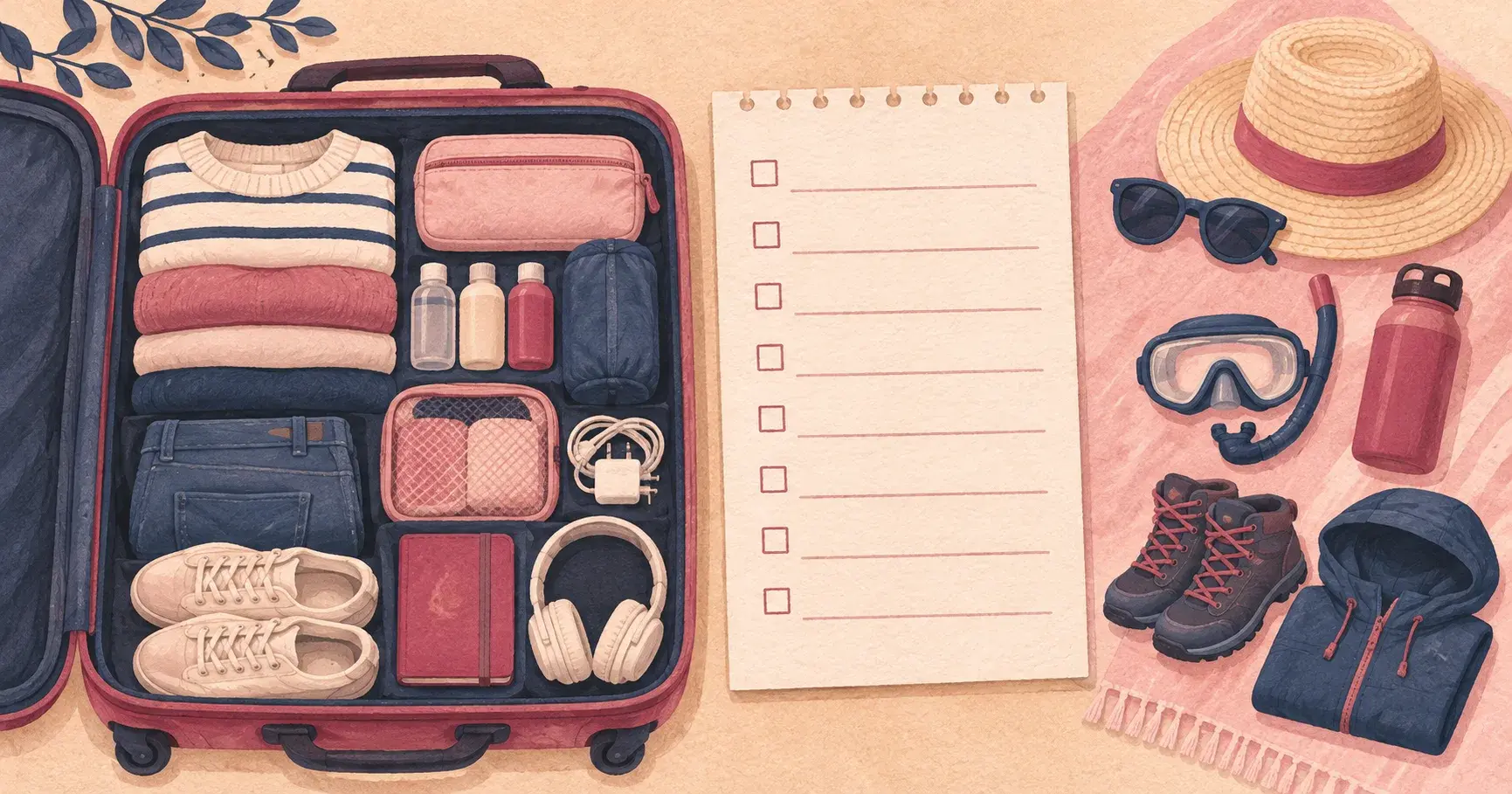
You have packed for this kind of trip before. Still, the next time you open a blank note, the charger, swim things, or the small bag for cables may take another round of thought. A master packing list gives those repeat items a home. You keep one broad list, then copy and trim it for each trip.
Build the list around a familiar core, categories you can scan, and a short section for the trip in front of you. After you return, adjust the original for next time. If you want that list alongside the rest of the plan, a trip planner spreadsheet with a master packing list is one option.
The Plan in Brief
- Keep recurring items in a small core, grouped by how you pack.
- Copy the core for each trip, then add or remove items to fit the plan.
- Review the trip copy when you return and update the master list from what you learned.
The master packing list: what belongs in the core
A master packing list holds the items that recur across trips, grouped so you can find them quickly. Use this table as a starting structure, then replace generic entries with the things you actually bring.
| Category | Possible entries | Keep in the core when… |
|---|---|---|
| Documents and access | Wallet, identification, booking details, keys | You use them on most trips or need to check them before leaving |
| Clothing | Everyday layers, sleepwear, underwear, socks | The item is part of your usual packing routine |
| Toiletries | Toothbrush, hair items, skincare basics | You have a travel set or routinely pack the item |
| Electronics | Phone, charger, headphones, adapters | You bring it often and know which cable goes with it |
| Comfort and health | Glasses, reusable water bottle, personal supplies | It is part of your own routine; follow your provider’s guidance for medicines |
| Bags and organizers | Day bag, laundry bag, packing cubes | You regularly use them to group or carry items |
| Trip additions | Swimwear, hiking layers, formal clothes, child’s favorite toy | The trip calls for it, so add it to that trip’s copy |
Use the possible entries as prompts and shape the list around your needs, airline and accommodation arrangements, and planned activities. A generic checklist can remind you to consider something. Your trip determines what belongs on the list.
Give the core a clear stopping point. Keep an item there when it comes up on most trips or when you want a reminder to check it each time. Move occasional gear to a separate section instead of adding it to the main list. This keeps the first scan short. You can still find a rain layer or a formal outfit when a particular plan calls for one.
Review the optional section after each trip, when you can tell whether an item stayed packed or came out repeatedly.
Write reminders as actions when an item needs preparation. “Pack charger” is a packing check; “charge camera battery” is a task to do before the bag is closed. That distinction helps you see what is already in the suitcase and what still needs attention. Keep both in the trip copy without making either a permanent part of the core.
The core will change as your routine changes. If you start traveling with a camera, add the equipment you use and the items that keep it protected. If you stop bringing a book, remove it. You do not need a separate master list for every destination. Keep the common items in one place and give repeat trip types their own small add-on only when that saves decisions.
For international travel, the U.S. Department of State’s International Travel Checklist says to check destination-specific entry and visa requirements and to organize required documents. Its page also notes that some medicines legal in the United States may not be legal elsewhere. Check the official guidance for your destination and your own circumstances.
Build categories you can scan while packing
Categories work when they match how you look for things. Start with a few broad groups, then split one only when it gets hard to use. “Electronics” may be enough for a short break; a longer trip with camera gear and several chargers might need separate subgroups.
Write each entry as a packable item, not a vague reminder. “Phone charger” is easier to check than “electronics.” “One pair of walking shoes” gives you a quantity and an item. Keep a separate note for details that need checking, such as a destination requirement or a supplier’s baggage limit.
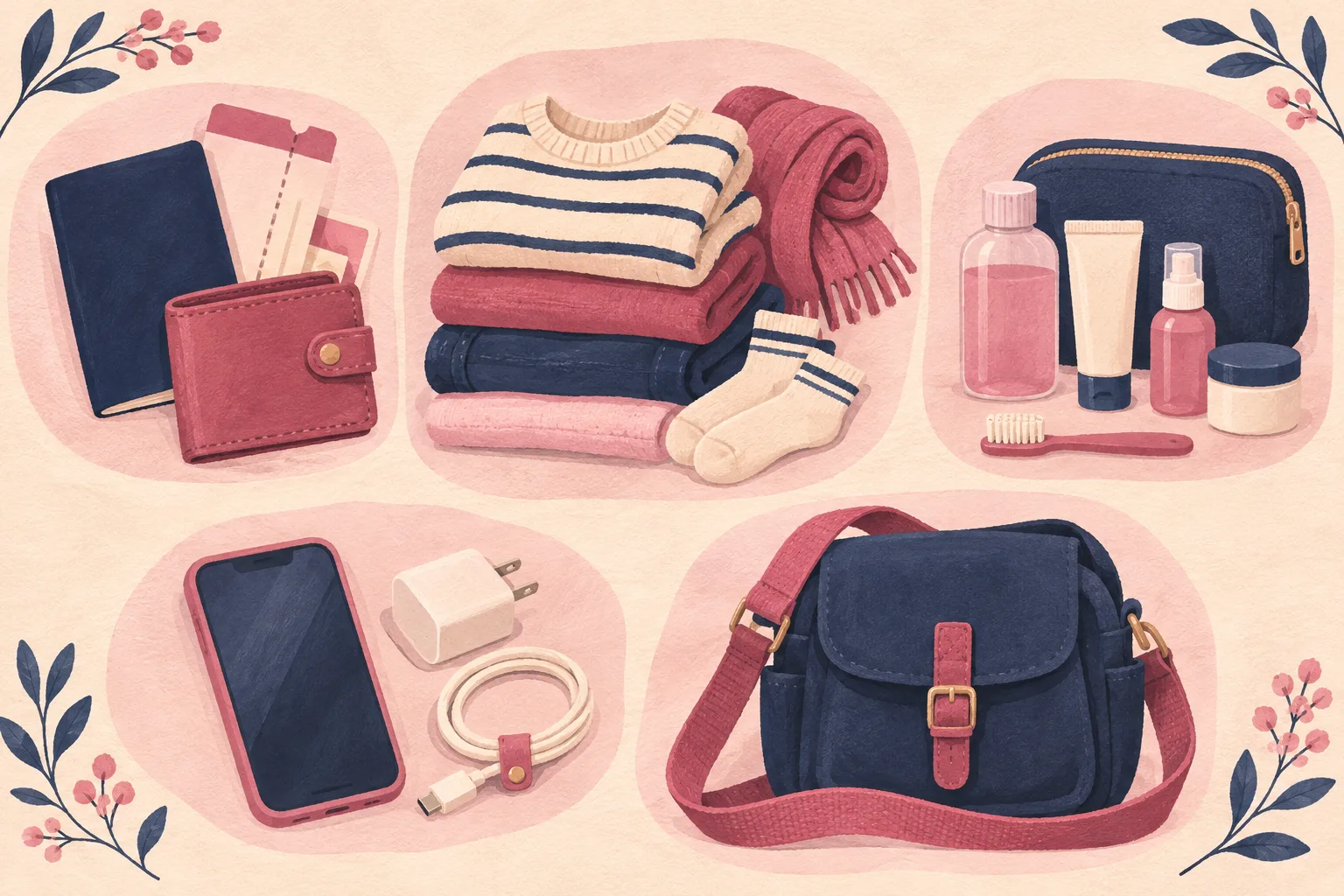
If you travel with someone else, keep shared supplies apart from personal items. One section can hold items used by the group, such as a shared adapter or first-aid pouch. Each person can keep a short list for clothing, glasses, devices, and other belongings they need to pack themselves. For children, keep their familiar comfort items on their own section so the adult doing the final check can find them.
Use a status that makes sense to you. A checkbox may be enough. If the same items live in different bags, add a “where it goes” note such as carry-on, day bag, or checked bag. Keep sensitive details like passport numbers and payment information out of a broadly shared packing sheet.
You can also mark items that need attention before packing. For example, a passport may need a validity check, while a charger may simply need to be placed in the bag. Keep these as separate actions. A list that mixes “buy,” “check,” and “pack” can leave you unsure whether an item is already ready to go.
If your list feels crowded, sort entries into three places: the recurring core, optional items for certain plans, and actions to finish before departure. A rain jacket might be optional until the forecast makes it relevant. A document check belongs on the action list. This small separation lets you scan the packing items without losing track of the preparation tasks.
Turn the master list into a list for this trip
Make a new copy before you start checking items off. That leaves the master intact and gives each trip its own record. Use the copy to decide what belongs, rather than packing every line just because it is there.
- Name the trip. Add the destination or trip label and dates if those help you tell copies apart.
- Keep the recurring core. Start with categories you use on most trips, then remove any that do not apply.
- Match items to the plan. Look at your itinerary and activities. Add the clothing, equipment, or supplies those plans call for.
- Check the details that can change. Review baggage rules with your airline and current security guidance for your departure airport. The TSA’s Travel Checklist points travelers to current prohibited-item rules for carry-on and checked bags.
- Pack by category or bag. Mark items as you pack them, and leave a place for anything you need to add at the last minute.
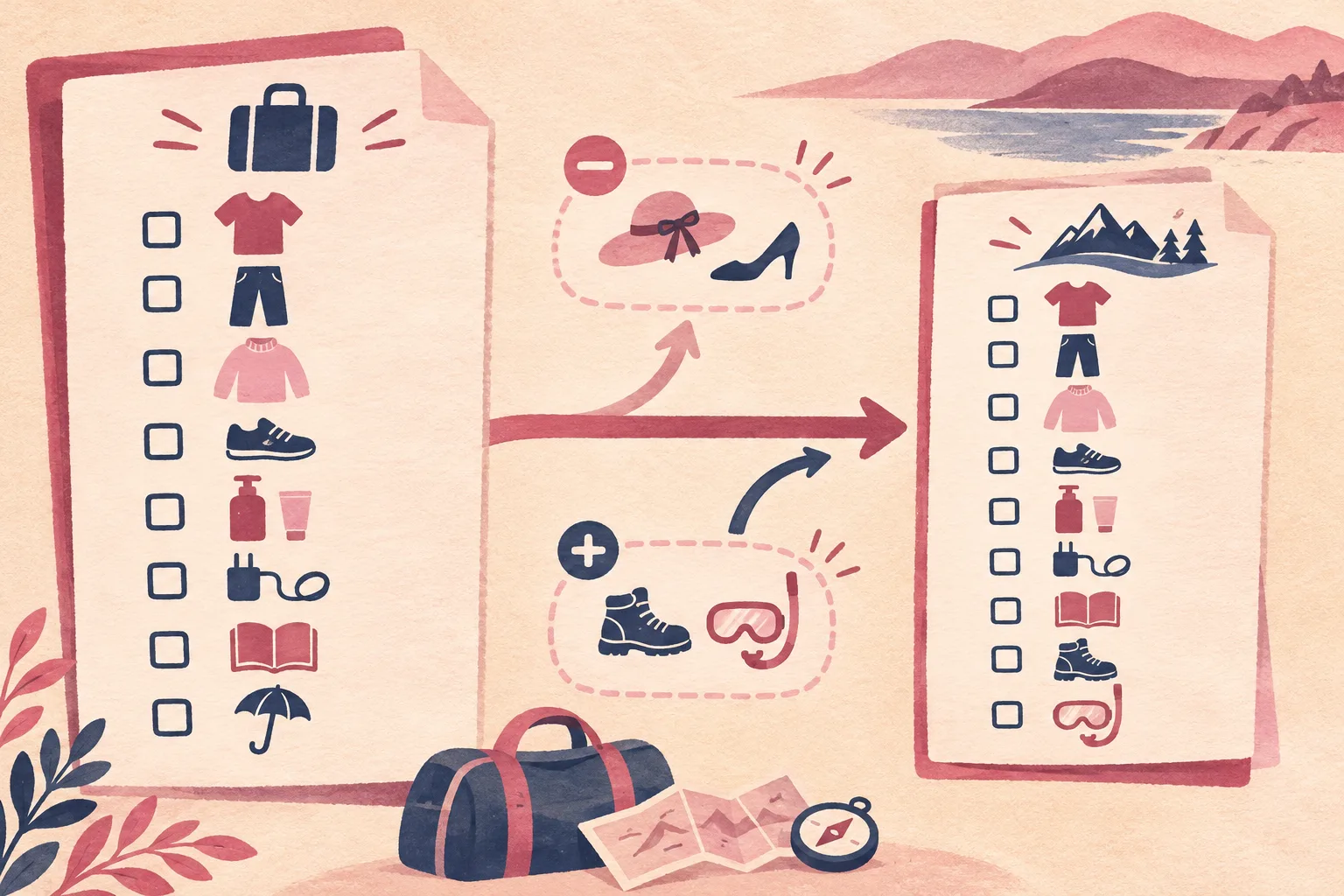
For a simple example, imagine a three-day city break and a week near a beach. Both copies may keep documents, everyday toiletries, and phone charging gear. The beach trip may add swimwear and a cover-up. The city break may keep comfortable walking shoes near the top. Those are examples only; your plans and preferences decide the entries.
An adapter can be a useful borderline item. If you only need it on some trips, keep it under optional gear and check the destination before packing. If it comes with you nearly every time, move it into the recurring core. A short note beside it can say what you need to check, such as plug type or device compatibility. That gives the next trip a clear decision without turning the master into a destination guide.
Keep this trip’s additions in the copy. Put a compact umbrella there if the forecast calls for rain. Move it into the core only if you use it on most trips. A cable you pack every time may belong in the core. Review what you used after you return.
For shared trips, decide whether each line belongs to one person or the group. A shared first-aid pouch may have one person responsible for packing it. Each traveler can still check their own clothes and personal items. That avoids duplicating a shared item across several copies while keeping individual needs visible.
Keep the master useful after the trip
Review the copy when you unpack or soon after. You can still remember what you used, what stayed in the bag, and which small item you had to borrow or buy. Make a note before editing the master so you do not confuse one trip’s odd requirement with a recurring need.
Use three simple questions:
- Did I use it? If yes, keep it in the core or the relevant trip category.
- Did it stay packed? If so, decide whether it still earns space in the master list.
- Did I need something that was missing? Add it to the trip copy first. Move it into the core only if it is likely to recur.
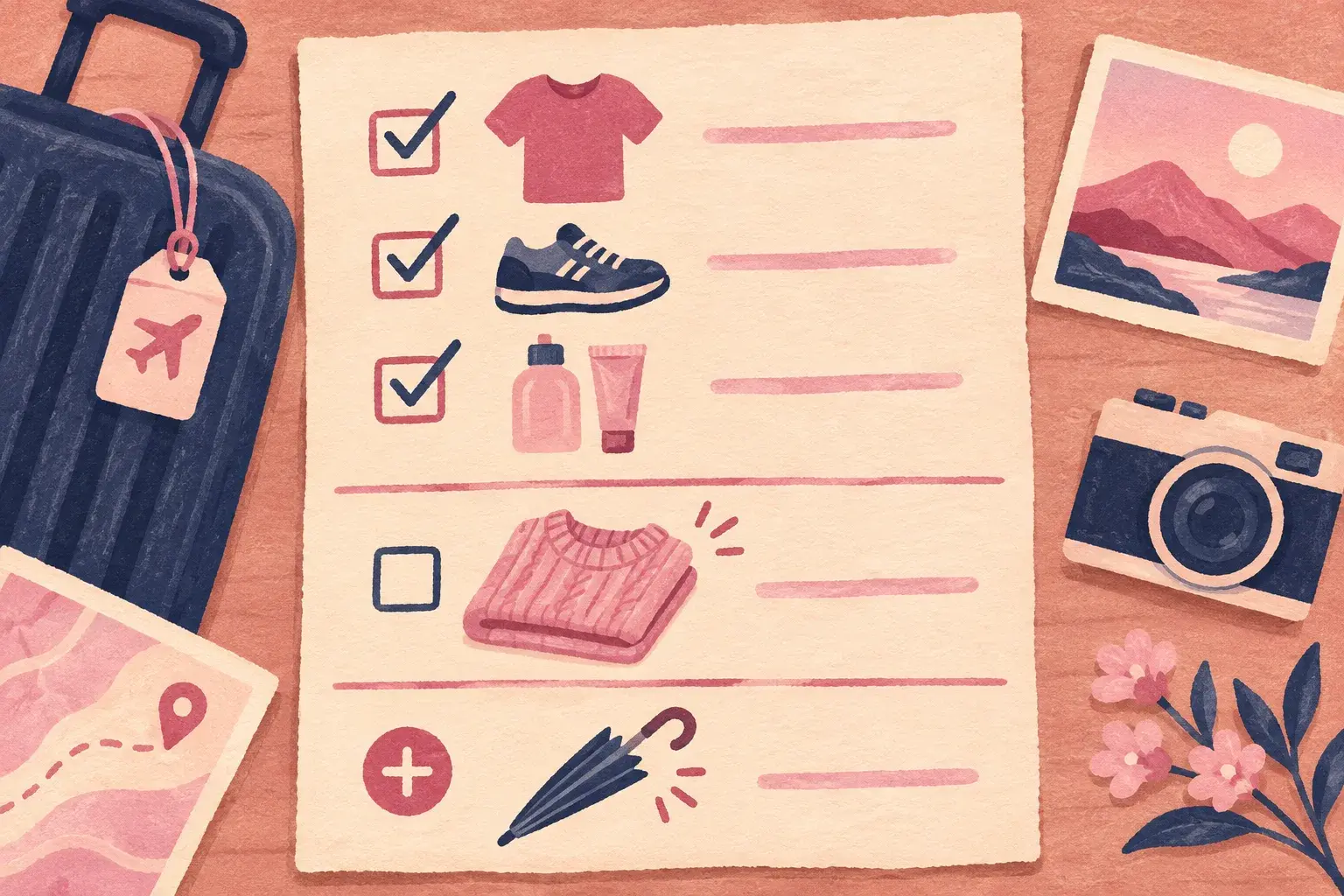
You might also record a packing detail that saves a future decision. For example, note which pouch holds your charging cables or which bag carries toiletries. Keep these notes short so the list stays easy to use.
For items you replace between trips, record what you need to restock in the trip copy. When you have bought it, remove the reminder from that copy. Keep recurring replacements in the master only if the reminder is useful before most departures. This keeps a one-time shopping task from following you into every future list.
For a ready-to-print checklist, see the travel packing list template. If you want the day-by-day plan beside the things you pack, the travel itinerary template with a filled sample trip shows how to organize each day.
Why Trust This Article
The Cosmo Suite team built the Ultimate Travel Planner and wrote this guide. We checked the U.S. Department of State’s International Travel Checklist and the Transportation Security Administration’s Travel Checklist on 12 November 2026. Those official sources cover destination requirements and current baggage guidance. Your own needs and plans determine what you pack. The examples in this article are planning prompts for you to adapt. Read about Cosmo Suite and our editorial policy.
Where the Ultimate Travel Planner fits
The Ultimate Travel Planner (ultimatetravelplanner.site) includes a packing list as part of a trip-planning file that also has itinerary and booking sections. You can see the trip planner spreadsheet with a master packing list. It is available in Google Sheets and Excel, with a filled sample and a clean copy.
Use the file as a starting point if you want your packing list beside the rest of your trip plan. A plain note or your own spreadsheet works too. Start with recurring items, copy the list for the trip, and update it when you return.
Frequently asked questions
What is a master packing list?
It is a reusable list of items you may need on different trips. Copy it for each trip, then remove what does not fit and add what does.
How do I make a packing list I can reuse?
Group recurring items by category, mark anything that depends on the trip, and save a fresh copy for each journey. Review it when you return.
Should I put every item I own on my master packing list?
No. Keep items that have a clear travel use, then put rare or trip-specific gear in a separate section so the core stays easy to scan.
How is a master packing list different from a trip packing list?
The master list holds possible items across trips. A trip list is a copy adjusted for one destination, activity, duration, and traveler.
How should I organize a family packing list?
Use shared categories for common supplies and separate sections for each traveler’s clothes, personal items, and must-carry belongings.
When should I update my master packing list?
Update it after the trip, while you remember what was useful, what stayed untouched, and what you wished you had added.
