Travel Anxiety Before a Trip: What Helps You Plan Anyway
Travel anxiety before a trip can turn loose ends into a long list. Sort open questions by what to verify, decide, ask, or leave flexible.
By Ultimate Travel Planner by Cosmo Suite · Editorial policy
Published · 7 min read
General information, not travel, legal or medical advice.
You have the dates, a few bookings, and a list of questions that keeps growing. Is the flight time saved somewhere easy to find? Did you check the entry rules? What happens if the arrival runs late? Searching for travel anxiety can bring up a long menu of calming tips, but the next useful step is often more ordinary: name the exact question underneath the worry.
Start with questions tied to dates, bookings, and official requirements. For other worries, mark the next action or leave them open for now. Aim for a usable plan with room for changes.
If you already keep your bookings in a trip itinerary spreadsheet, this method helps you see which details belong in the plan and which ones do not need a decision yet.
The Plan in Brief
- Turn a broad worry into one clear question.
- Verify rules and bookings with their official source or provider.
- Put an owner and a next step beside questions that need action.
- Keep optional parts of the trip open until you need to decide.
Sort a worry into a next action
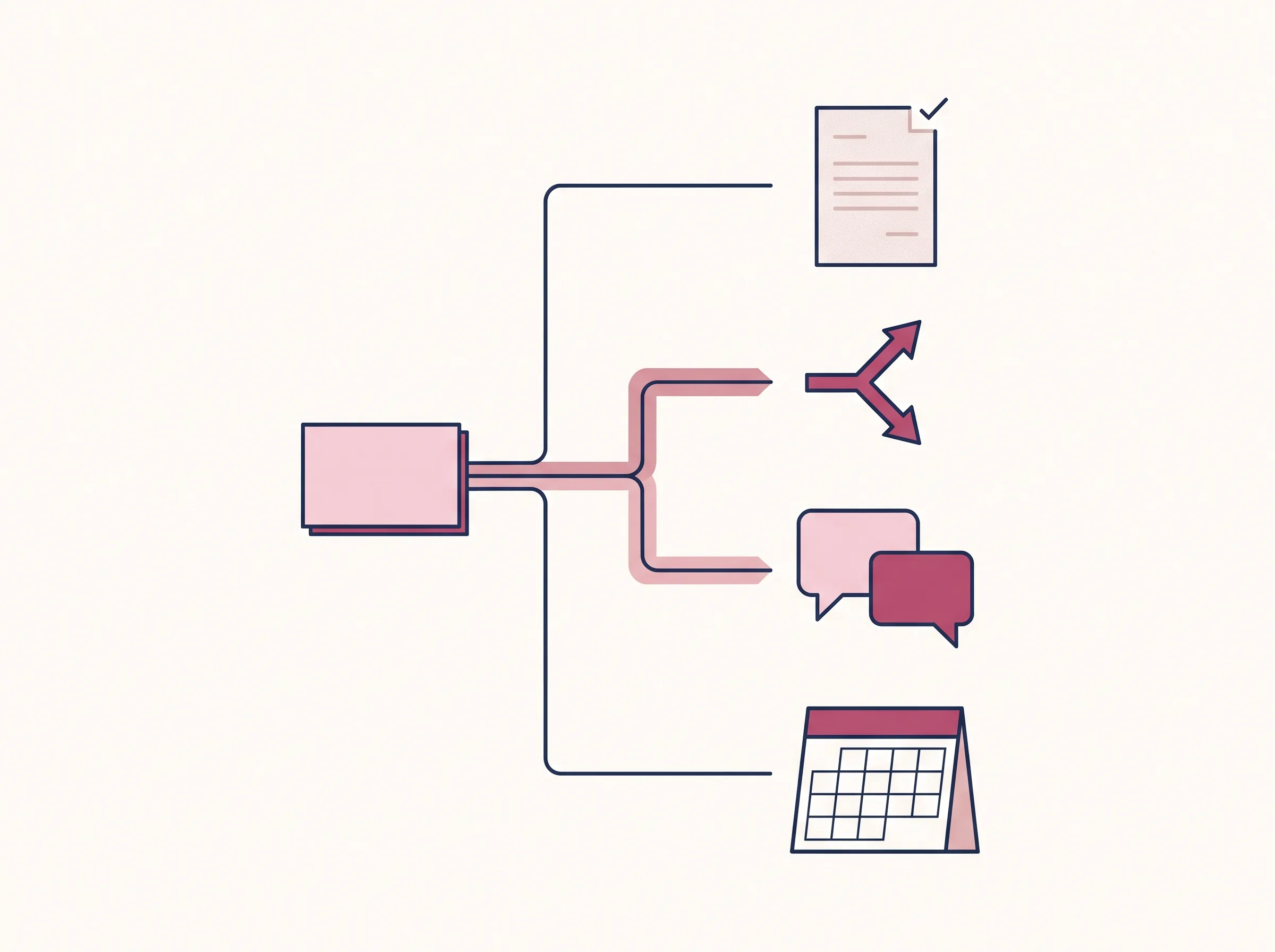
When a question feels too large, classify it by the action it needs. Some details have a current source to check. Some need a personal choice. Others depend on a provider or travel companion. The rest may stay undecided.
Pre-trip travel worry is a concern about an upcoming booking, travel step, or detail you have not confirmed yet. Naming the subject makes it easier to choose a useful next action.
| If the question is about... | Put it in this group | Example next step |
|---|---|---|
| Entry rules or required documents | Verify | Check the official destination guidance for your passport and route |
| A confirmed flight or stay | Verify | Open the latest message from the airline or accommodation |
| How full a day should be | Decide | Choose one fixed activity and mark the rest as optional |
| A booking another person must confirm | Ask | Send one specific question to the provider or companion |
| Weather, delays, or an unchosen meal | Leave flexible | Note what can move and decide when you have current information |
Use the table to give each open question one next step. Start with the item that could change a date, cost, or booking. Keep other questions visible without treating them as overdue.
Turn “what if” into a question you can answer
A useful question names one detail and the source that can settle it. “What if something goes wrong?” is too broad to act on. “What is the accommodation’s check-in process if our arrival is delayed?” has a clear owner and a place to look.
Try writing each open loop in four parts: the question, the next action, who owns it, and when you will revisit it. A notebook or simple list is enough for this working note.
| Open loop | Next action | Owner | Revisit |
|---|---|---|---|
| I cannot find the latest flight details | Check the airline confirmation | Me | Before leaving home |
| I do not know how late check-in works | Ask the accommodation | Me | When they reply |
| We have too many ideas for arrival day | Pick one optional activity | Travel companion and me | After arrival |
The examples are illustrative. Replace them with questions from your own trip. If the source is an airline, hotel, tour operator, or government agency, check it directly instead of relying on an old screenshot or an older travel discussion.
The U.S. Department of State's travel planning page points travelers to destination advisories, entry and exit requirements, and document preparation. Its International Traveler's Checklist also recommends organizing documents and keeping copies. These are U.S. government resources for U.S. travelers. If you hold another passport, check your own government's travel guidance and the destination's official rules.
For questions about U.S. airport screening or carry-on items, check the Transportation Security Administration's travel tips and screening guidance. For another country or airline, use the responsible authority or carrier.
Verify the detail that can change your plan
Passport validity, visas, local requirements, carrier rules, and reservation status can change or depend on your exact route. Check them with the relevant official authority or provider, and record the date in case you need to revisit the answer.
Keep the source beside the task. For example, “check entry rules” is more useful when you note the destination, the official page, and the date you checked. If the trip changes, you know what to verify again. Do not treat a saved note as current advice.
Keep each detail with the source that confirms it. A booking reference belongs with the booking. A rule belongs with its official source. A travel forum can suggest a question to ask, while the authority responsible for your documents or route can confirm the requirement.
This boundary is helpful because it limits research. Check only the details that affect your actual trip. You do not have to build a file of every rule that could apply to every traveler in every destination.
Decide how much of each day needs a plan
A day plan is useful when it shows fixed commitments and leaves the rest readable. You do not need to fill every morning, afternoon, and evening block. Add the items that anchor the day, then mark ideas as optional until you decide to book or visit them.
For a simple arrival day, that might mean the flight, the address where you are staying, and any confirmed check-in instruction. A meal idea can remain a note. A sightseeing list can wait until you know how much time is free. If a fixed booking changes, update that part first instead of rewriting the whole trip.
The sample view below shows a stay and planned blocks for each day. It illustrates the structure of one itinerary without making claims about a traveler's experience or schedule.
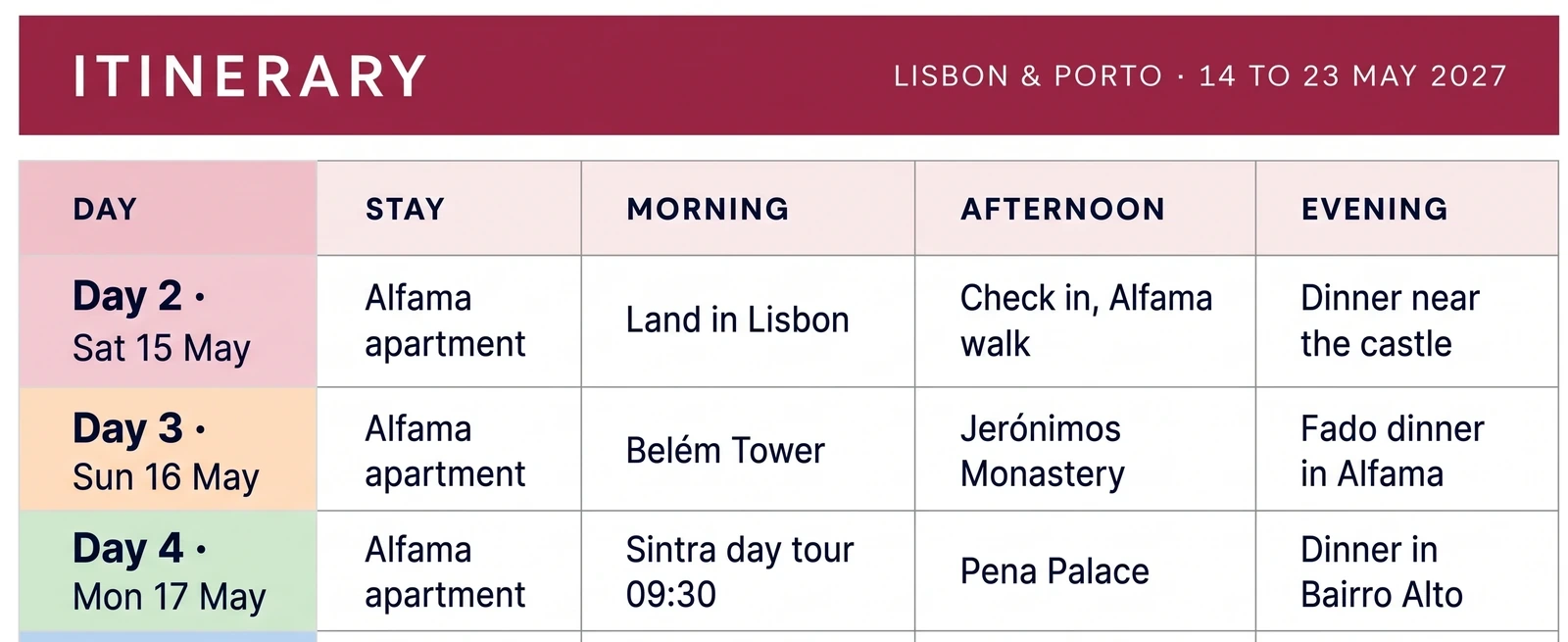
This is also where a travel itinerary example with bookings beside the day they affect can help you see the difference between a confirmed reservation and an activity idea. Labeling those separately makes the plan easier to change.
Make a small fallback for the part you can control
A fallback names a next step if plans change. If a connection is missed, the useful question is who to contact and where to find the booking details. If you arrive later than expected, check the accommodation's current instructions. If a tour is canceled, look at its refund or rescheduling terms with the operator.
Keep the fallback proportional. A short note such as “check the airline app, then contact the carrier if the itinerary changes” may be enough. A trip planner spreadsheet that keeps your bookings and daily plan together can help you find confirmed details when you need to check a change. Avoid inventing a backup for every possible delay or writing a second full itinerary that may never be used.
For anything that involves money, deadlines, entry requirements, or a provider's policy, use the current terms from the responsible source. Do not rely on an old message if the booking has changed. If another person has the decision, record their name and the question you need answered.
Some choices can wait. You might pick a restaurant for an unplanned evening after you arrive. Questions about entry requirements need a current official answer before departure. Give each question the attention its next step requires.
Set a stopping point for the research. When you have the current answer, saved its source, and know whether anyone still needs to act, close that question for now. Reopen it only if a booking, route, date, or official instruction changes. This keeps preparation connected to the trip you are actually taking. It also leaves space for the part that cannot be planned in advance: choosing among the ordinary options once you have current information.
Why Trust This Article?
Ultimate Travel Planner is published by Cosmo Suite. The images above show its real Lisbon and Porto sample planner views. The questions are illustrative and have not been evaluated in a user study. We checked the two U.S. Department of State travel pages linked above on 24 October 2026. Their guidance is for U.S. travelers, so check the authority that applies to your passport and destination. Read the site's editorial policy for how its blog content is sourced and reviewed.
Where Ultimate Travel Planner Fits
When dates, bookings, and day plans live across messages and notes, you may spend time searching before you can make the next decision. A single itinerary can keep confirmed details together and leave room to update the plan as details change.
The Ultimate Travel Planner at ultimatetravelplanner.site is a spreadsheet with 12 connected tabs in Google Sheets and Excel. It includes a trip overview, itinerary, day plan, bookings, budget, spending log, packing lists, pre-trip tasks, and document contacts. It comes with a filled sample and a clean copy, plus two printable pages. The rate for currency conversion is typed in by you; the file does not import bookings from email or book anything.
If that format suits how you plan, a trip planner spreadsheet with 12 connected tabs keeps your confirmed details and day plans together. The travel itinerary template with bookings beside each day shows how the pieces fit together. You still need to verify current rules and booking information with their sources. A spreadsheet organizes what you know; it does not resolve every uncertainty for you.
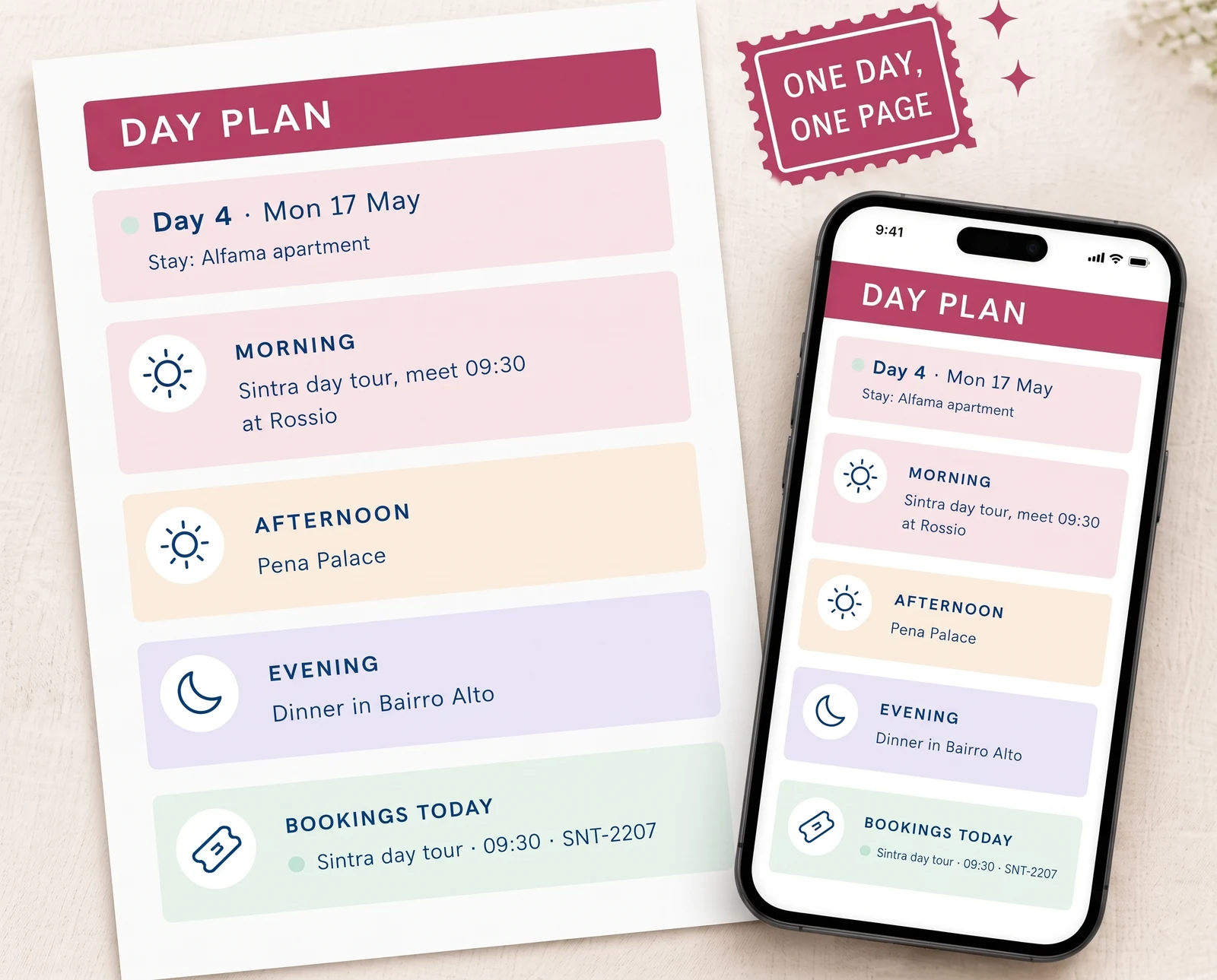
The sample's phone-friendly Day Plan view is another way to scan the day's blocks when you are away from your computer. It shows the plan you entered; check your provider for live flight details.
Frequently asked questions
What can I do when I feel anxious before a trip?
Write down the specific question behind the worry, then choose one next step: verify it with an official source, make a decision, ask the person responsible, or leave it open for now. This method covers trip logistics only.
Can planning help with travel anxiety?
Planning can make practical details easy to find, including dates, booking confirmations, and the address of your stay. Delays, weather, and how you feel remain outside the plan, so leave room for changes.
How do I prepare for a trip without overplanning?
Start with details that affect a fixed date or booking. Verify those, write down who owns the next action, and keep optional activities as ideas. Stop when the important details are easy to find.
What should I do if my travel plans change?
Check the current information with the airline, accommodation, or other provider involved. Update the parts of your plan that depend on the change, then leave unrelated ideas alone until you know what time remains.
How can I feel more prepared for the first day of a trip?
Keep your arrival details, accommodation information, and any fixed booking easy to find. Leave optional plans open so a change in timing does not force you to rebuild the whole day.
Can a travel itinerary spreadsheet help with pre-trip worry?
A spreadsheet can keep dates, bookings, daily plans, and trip details together. Check current rules with the relevant official source or provider, since the spreadsheet only organizes information you enter.
