How to Avoid Jet Lag: Plan a Lighter First Day
How to avoid jet lag starts with a gentler arrival day: leave room to adjust, keep fixed bookings visible, and plan the first 48 hours simply.
By Ultimate Travel Planner by Cosmo Suite · Editorial policy
Published · 9 min read
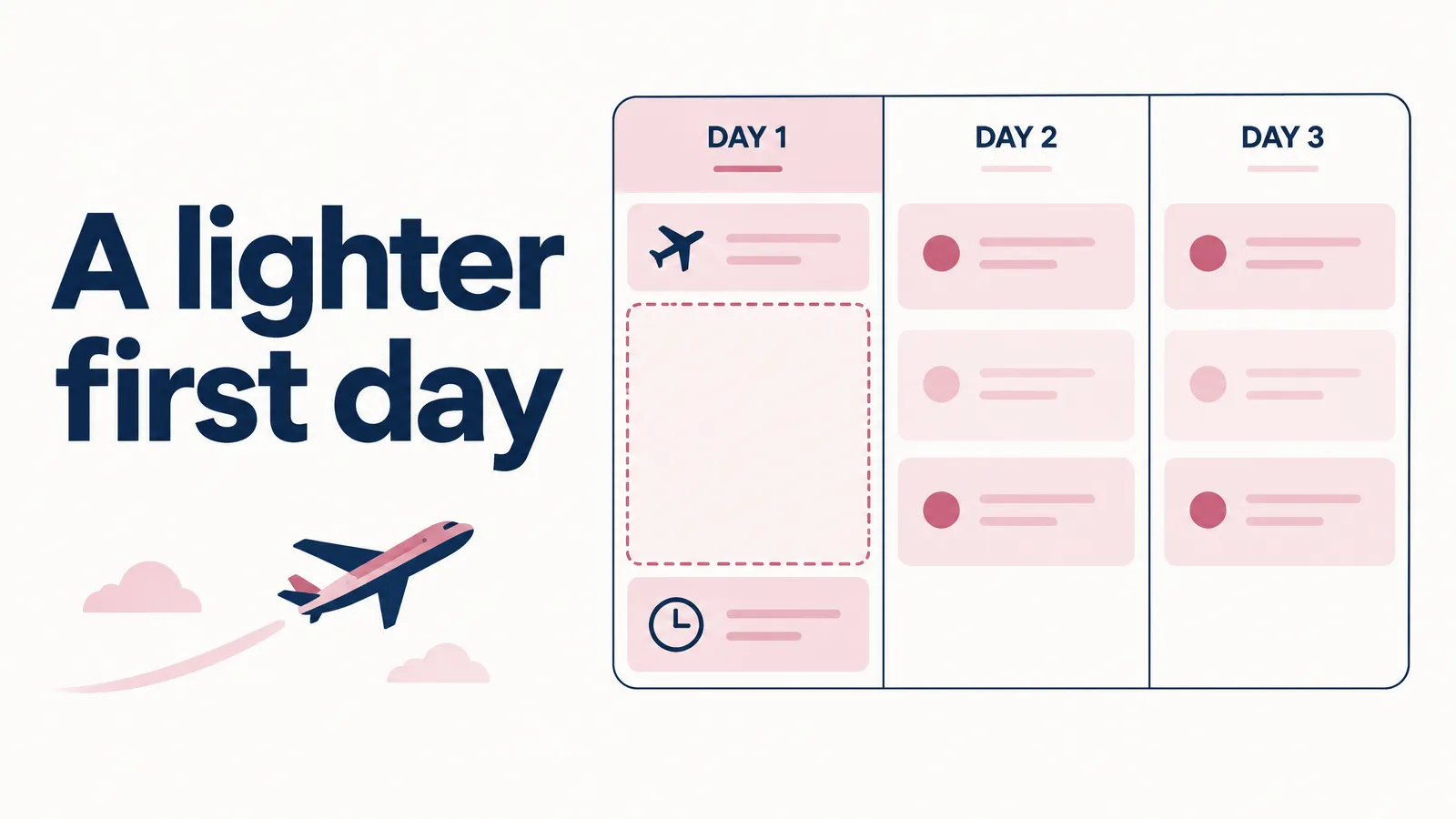
You land in the morning, drop your bags, and have a full sightseeing day in the calendar. It looked sensible when you booked the trip from home. At the airport, every stop now feels like a deadline.
If you are searching for how to avoid jet lag, the Centers for Disease Control and Prevention (CDC) offers general steps that may help reduce its effects. For the trip itself, there is a planning choice you can make before you fly: leave your first day light, with room around the things that cannot move.
If you already plan in a travel itinerary spreadsheet, keep the arrival address and fixed bookings beside that day's open time. The file can organize the details while you decide which optional plans still fit after you arrive.
General information, not travel, legal or medical advice. We checked the CDC's Travelers' Health page and the NHS jet lag page on 14 October 2026. They describe general steps travelers can consider. Neither source gives advice tailored to your circumstances.
What to plan when jet lag may affect arrival
Jet lag is a temporary sleep problem caused by a mismatch between a person's normal daily rhythms and a new time zone, according to the CDC. It can affect mood, concentration and performance too. For the itinerary, keep open time on arrival day and make the first fixed commitment easy to find. Your schedule cannot predict how you will feel, so a packed timetable adds pressure without making the adjustment predictable.
The CDC says jet lag is usually associated with travel across more than three time zones, though it can affect anyone traveling across multiple time zones. The page's suggestions include gradually shifting sleep before travel, following the destination's sleep and wake routines after arrival when the difference is more than three hours, and considering arrival at least two days before important events.
Those are general suggestions from the CDC, not a personalized plan. The CDC advises speaking with a doctor about medicines or sleep aids if jet lag is a concern. Read its Jet Lag guidance for the full context.
Arrival-day plan at a glance
An arrival day works better when the schedule separates fixed commitments from optional ideas. The example below is a planning layout, not a recommendation about sleep or health.
| Part of the day | Put in the plan | Leave flexible |
|---|---|---|
| Arrival | Flight arrival details and how you will reach your stay | Extra stops on the way |
| Check-in | Accommodation address and check-in details | Exact timing if the provider has not confirmed it |
| First meal | A nearby option you can choose if useful | A reservation that adds pressure |
| Afternoon | One optional, low-commitment idea | A long list of sights |
| Evening | The next fixed booking, if any | A late activity after a delayed arrival |
In this table, “flexible” means you can skip or move the item without affecting a booking. Confirm transport, check-in and reservation details with the provider. Keep the itinerary as a clear record, not a promise that every block will happen.
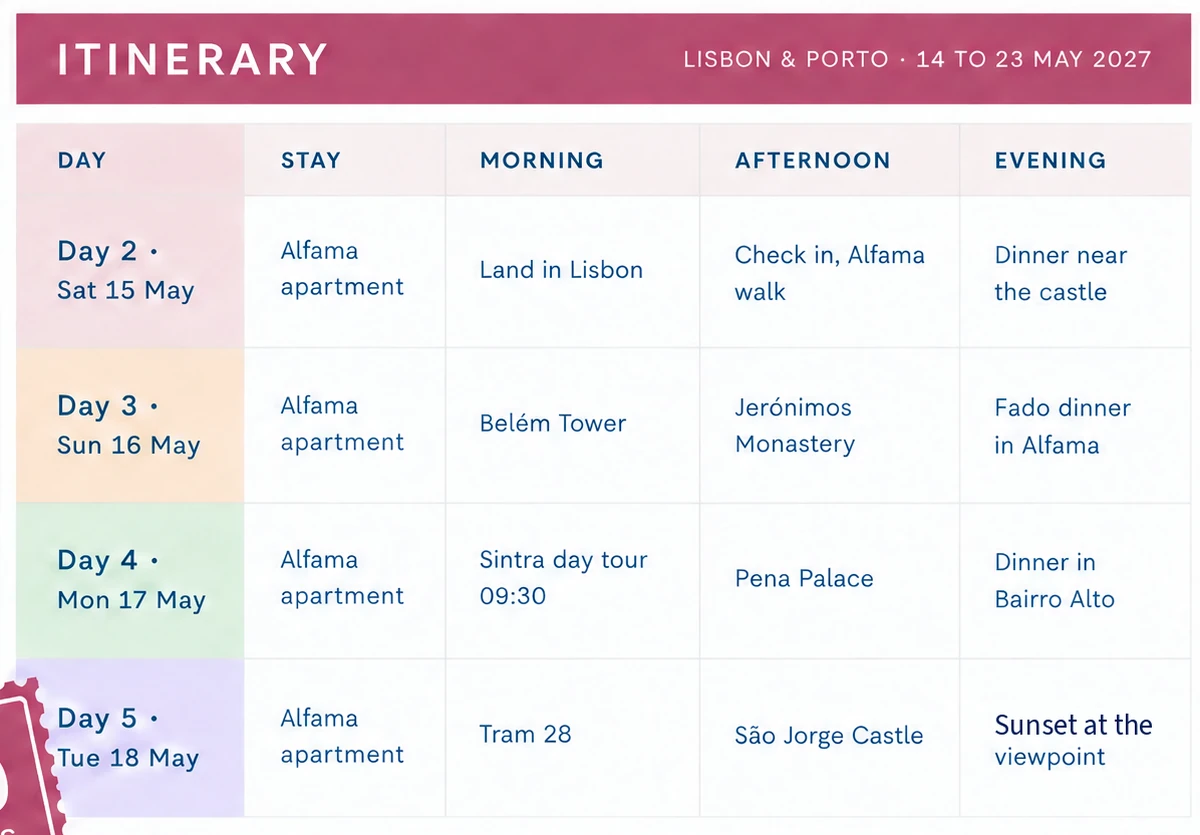
[Original data] Day 2, Saturday 15 May 2027, lists “Land in Lisbon” in the morning, “Check in, Alfama walk” in the afternoon, and dinner near the castle in the evening; Day 3 lists Belém Tower, Jerónimos Monastery and a fado dinner in Alfama. These are the sample's actual entries, not a jet-lag study. The first day's three blocks can stay visible while later sightseeing remains optional, and the next day's fuller schedule shows which activities might need to move if arrival takes longer. The file shows planned activities, not whether anyone felt rested or followed the plan.
Before the flight: make room in the schedule
The CDC says travelers going west may consider going to bed an hour or two later than usual for a few days before travel; for eastbound travel, it suggests going to bed an hour or two earlier. It also says to consider arriving at least two days before important events. Check the source page for the full guidance and ask a healthcare professional about individual circumstances.
For the planning side, put the arrival date, flight details, accommodation and any immovable booking in the same day view. Then mark the rest as optional. That way, a companion can see what has to happen without treating every idea as a commitment.
If the flight is delayed or the accommodation changes its check-in process, update the fixed details first. Leave the sightseeing list alone until you know what time remains. This is also a good reason to keep booking confirmation details with the itinerary rather than scattered through notes.
On arrival: follow current guidance and keep the day open
When the new time zone differs by more than three hours, the CDC says to follow the destination's sleep and waking routines after arrival. Its other suggestions include spending daytime in well-lit areas, eating small meals, avoiding alcohol because it disrupts sleep, using caffeine and exercise strategically while avoiding them in the evening, drinking water, and taking a short nap of no more than 15 to 20 minutes if sleepy during the day. The NHS recommends going outside in daylight and changing the sleep schedule to the new time zone, and advises against daytime sleep. The sources therefore differ on naps; this article does not choose between them or suggest which guidance suits an individual.
These pages provide general information. Personal health needs can change what is appropriate, so check with a healthcare provider if you have questions. An itinerary can keep the day uncluttered, but it cannot tell you what your body needs.
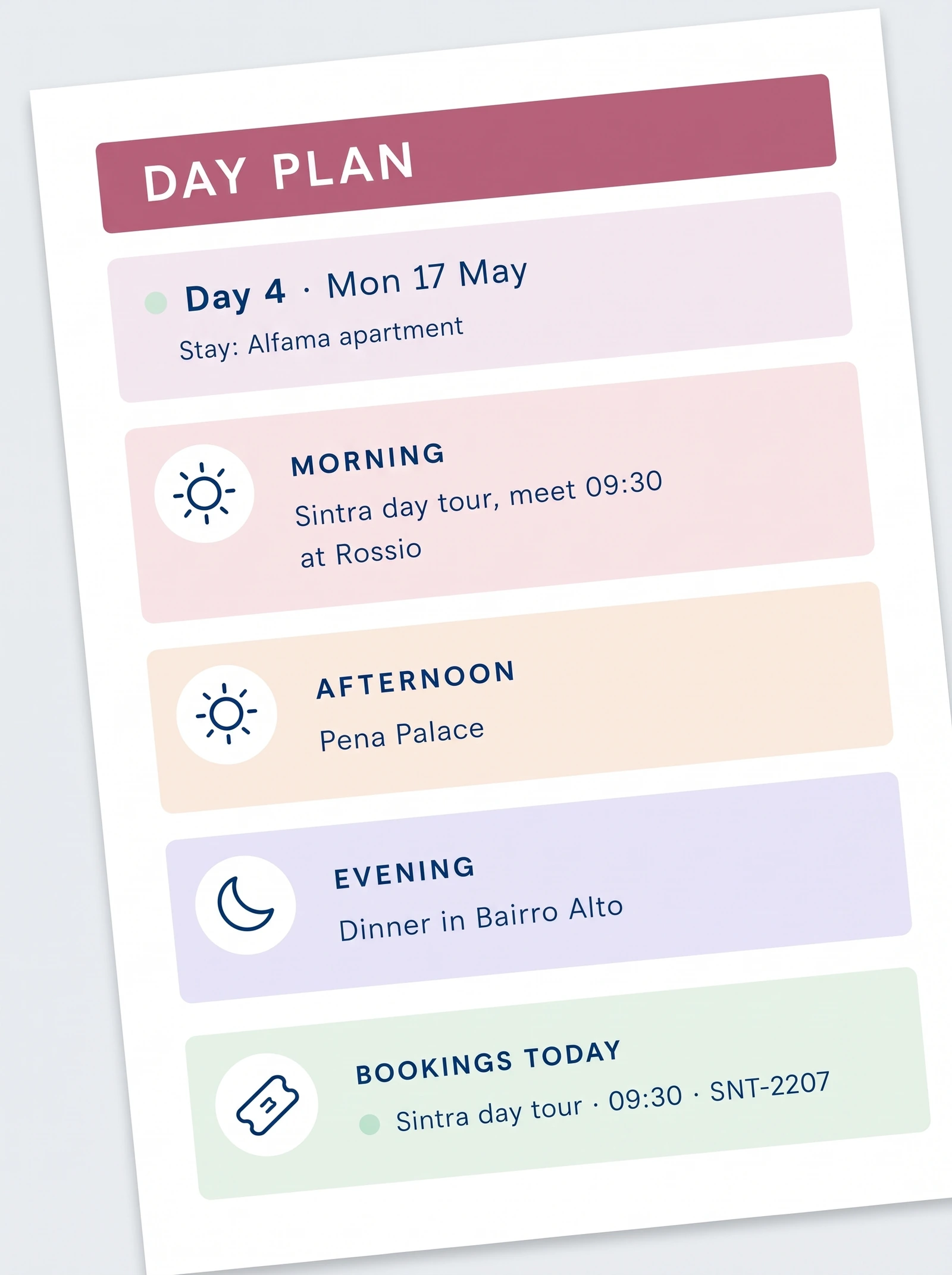
Avoid building an arrival schedule around a string of timed tickets. If a fixed booking is unavoidable, keep its address, start time and confirmation details easy to locate. Put optional stops in a separate list so you can decide later whether to use them.
Plan the first two days as a pair
Think about the arrival day and the next morning together. Put the flight and check-in on day one, then place only confirmed commitments on day two. Keep ideas nearby but outside the schedule until you see how the arrival went.
A connected itinerary spreadsheet can keep a booking beside the day it affects, so a change to the arrival does not leave a separate plan out of date.
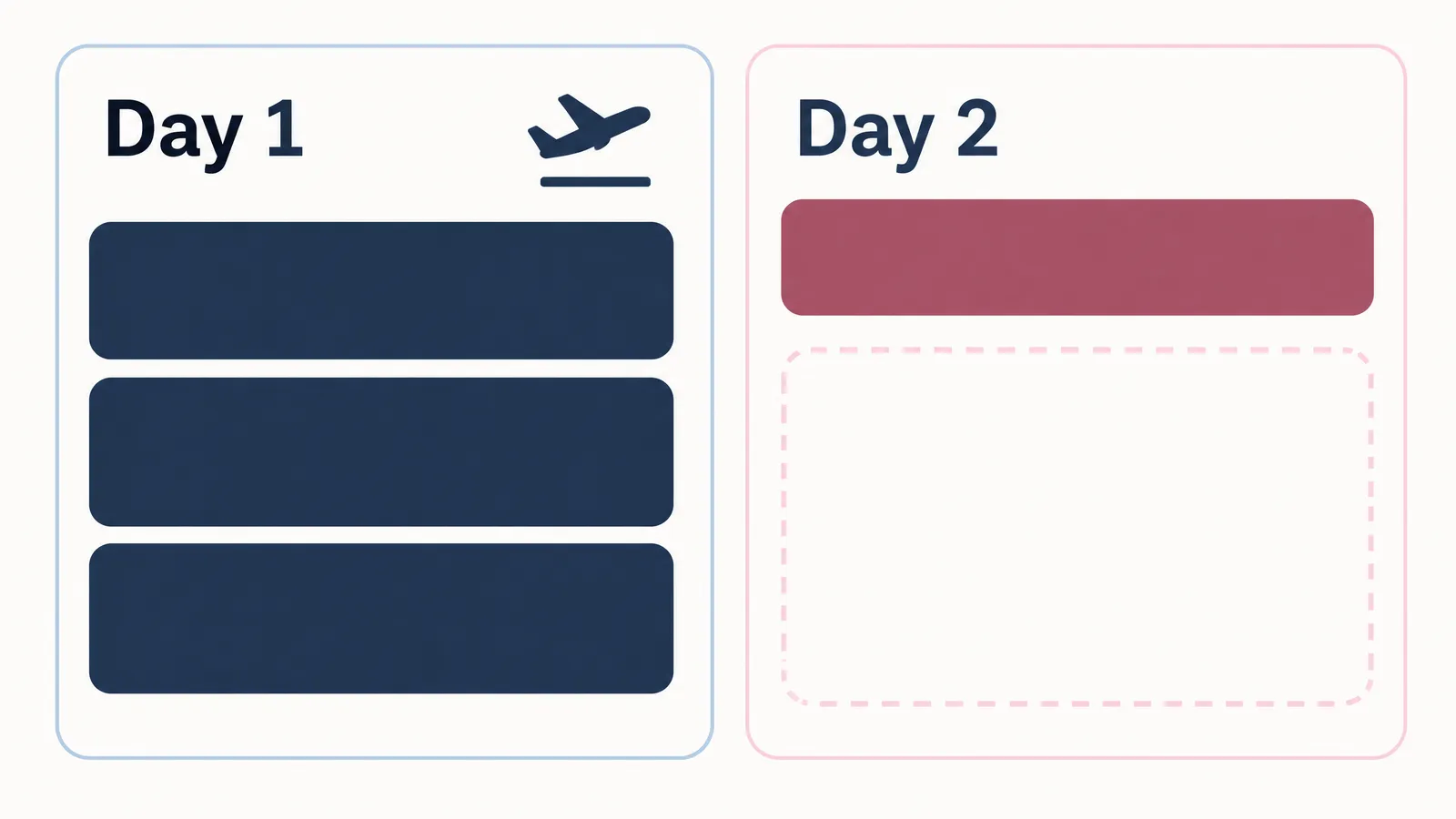
For a multi-stop trip, check where you sleep each night before filling free hours. A train departure, hotel change or tour may already set the shape of the day. The itinerary should make those constraints visible, then give the remaining hours back to you.
If someone else is traveling with you, share the current plan and say which blocks are optional. That avoids treating an idea list as a promise. Update the copy everyone uses if the flight or booking changes.
A short checklist for a calmer arrival plan
- Add the arrival time and the provider's latest details.
- Record the accommodation address and check-in information.
- Keep essential bookings visible with their confirmation details.
- Leave open space around arrival and the first morning.
- Mark sightseeing ideas as optional until you are there.
- Check the CDC page and consult a healthcare provider for personal health questions.
The useful test is simple: if the arrival runs late, can you tell what needs an update and what can be dropped? If the answer is clear, the schedule has room to flex.
A worked planning example
Imagine a flight lands at 09:00 and the accommodation says check-in starts at 15:00. Those times are only an example, not a destination recommendation. Put the flight and check-in details in the plan, then leave the gap open. If the provider offers luggage storage, add its confirmed details. If not, keep the gap free until you know what is practical.
Suppose you also have a timed museum booking at 16:00. That is now a fixed commitment, so keep the address and ticket details with it. Put a cafe or a walk in the ideas list instead of promising both in the timetable. If the flight arrives late, the optional list can wait. If the day goes smoothly, choose an idea when you arrive.
This example separates three kinds of information: confirmed times, details to verify, and ideas. They need different treatment. A confirmed booking belongs on the day's plan. A detail you are waiting to confirm needs a reminder. An idea can stay outside the schedule. Mixing them makes a plan look busier than it is.
When the first day is already full
Sometimes the arrival day has a connection, a transfer, or an event that cannot move. Start by checking each detail with the airline, accommodation or event provider. Then mark the parts that depend on an on-time arrival. Leave a fallback in your notes if you have one, but do not assume a provider will hold a booking unless it has said so.
For a group, agree which person has the latest confirmation details and how everyone can reach them. Keep the address and booking reference in the shared plan, subject to the group's privacy preferences. Do not put passport numbers or payment details in a broadly shared itinerary. The planner is a useful index; each traveler should keep sensitive documents securely.
If you have an important event soon after arrival, the CDC's page suggests considering arrival at least two days ahead. That may not fit every trip. It is a planning point to weigh against your own constraints, not a guarantee of how you will feel.
Why Trust This Article
The Cosmo Suite team built the Ultimate Travel Planner and wrote this article. We checked the CDC's Travelers' Health page on Jet Lag and the NHS jet lag page on 14 October 2026. The sample itinerary images show the planner's existing day and booking views; they do not document a jet-lag treatment or travel-health test. We provide general planning information, not medical, legal or travel advice. Read about Cosmo Suite and our editorial policy, then verify your arrangements with the relevant providers.
Where the Ultimate Travel Planner fits
If you want the fixed details and flexible ideas in one place, the Ultimate Travel Planner itinerary spreadsheet has connected tabs for bookings, the itinerary and a one-day view. The sample trip shows bookings beside each day. You can use those views to keep arrival details visible and leave optional plans loose.
It comes in Google Sheets and Excel, with a filled-in sample and a clean copy. It does not import bookings from email or provide live currency rates. A day-by-day travel itinerary template explains how the booking and itinerary views work. If a simple note is enough for your trip, use that.
Frequently asked questions
What are five symptoms of jet lag?
The CDC lists trouble sleeping, daytime tiredness, difficulty concentrating, mood changes, and stomach problems among possible effects. Experiences vary.
Does sleeping on a plane help with jet lag?
The CDC page advises following the destination's sleep and wake routines after arrival when the time difference is more than three hours. Ask a healthcare provider about medicines or sleep aids.
How do I plan the first day after a long flight?
Keep the day light, put essential fixed bookings in one place, and leave unscheduled space around them. Avoid making a tight sightseeing plan depend on how rested you feel.
How long does jet lag last?
It varies. The CDC describes jet lag as a temporary sleep problem. This article does not predict an individual recovery time.
Should I schedule an important event right after landing?
The CDC suggests considering arrival at least two days before important events. For health questions that depend on your circumstances, ask a healthcare provider.
What should I put in my itinerary for arrival day?
Record arrival details, the place you are staying, and any fixed booking. Keep the remaining blocks flexible, and check the latest flight and booking details with their providers.
Frequently asked questions
What are five symptoms of jet lag?
The CDC lists trouble sleeping, daytime tiredness, difficulty concentrating, mood changes, and stomach problems among possible effects. Experiences vary.
Does sleeping on a plane help with jet lag?
The CDC page advises following the destination's sleep and wake routines after arrival when the time difference is more than three hours. Ask a healthcare provider about medicines or sleep aids.
How do I plan the first day after a long flight?
Keep the day light, put essential fixed bookings in one place, and leave unscheduled space around them. Avoid making a tight sightseeing plan depend on how rested you feel.
How long does jet lag last?
It varies. The CDC describes jet lag as a temporary sleep problem. This article does not predict an individual recovery time.
Should I schedule an important event right after landing?
The CDC suggests considering arrival at least two days before important events. For health questions that depend on your circumstances, ask a healthcare provider.
What should I put in my itinerary for arrival day?
Record arrival details, the place you are staying, and any fixed booking. Keep the remaining blocks flexible, and check the latest flight and booking details with their providers.
